


Last Updated: November 15, 2026
Quick Summary
To learn how to display an oil painting in a living room, first choose the wall your eye lands on from the main doorway, then hang the canvas center at 57 to 60 inches from the floor. Give the piece generous negative space and keep it off direct sun, heat, and moisture.
- Artwork above a sofa should span about two-thirds of the sofa's width.
- Keep the gap between frames in a group consistent at two to three inches.
- Use two hooks a few inches apart, or a French cleat, for heavy canvases.
- A gallery-wrapped canvas can hang bare, keeping texture and brushwork visible.
- Keep a small air gap behind the canvas so moisture can equalize.
Table of Contents
- The First Decision: Where an Oil Painting Belongs in Your Living Room
- How to Display Paintings in a Living Room: Hanging Height and Visual Balance
- Oil Painting Above Sofa Ideas That Hold the Room Together
- Where Not to Hang Oil Paintings: Light, Heat, and Moisture Traps
- How to Frame a Canvas Painting Without Hiding Its Texture
- Hardware and Wall Safety: Mounting Heavy Canvases Correctly
- Lighting and Preservation: Protecting Oil Paintings from Sunlight and Climate Shifts
- Choosing the Right Piece for Your Living Room
- Frequently Asked Questions
The First Decision: Where an Oil Painting Belongs in Your Living Room
Learning how to display an oil painting in a living room starts with one question: where should the eye land first? Choose the wall before you choose the hardware.
Walk into the room from the doorway you use most. The first wall you face is your natural focal point. That is usually the wall opposite the main entry, or the one beside the fireplace.
The Focal Point and Negative Space
Negative space is the empty wall around a painting, and it does more work than most people realize. A canvas crowded by shelves, sconces, and a television loses its impact.
If your living room is compact or awkwardly shaped, the layout puzzle gets harder. Our guide to styling art in small apartments walks through those tighter spaces in detail.
How to Display Paintings in a Living Room: Hanging Height and Visual Balance
Hang the center of the canvas at eye level, roughly 57 to 60 inches from the floor, which keeps the painting in comfortable view whether you are standing or seated.
Visual balance matters as much as height. A heavy, dark composition needs more surrounding wall than a pale, airy one. Portrait orientation suits narrow walls; landscape orientation suits wide ones.
A few measurements do most of the work when you hang a painting in a living room.
| Item | Value | Note |
|---|---|---|
| Center of canvas height | 57 to 60 inches from floor | Keeps painting in view standing or seated |
| Gap between frames in a group | Two to three inches | Keep the gap consistent |
| Artwork span above sofa | About two-thirds of sofa width | Narrower looks stranded |
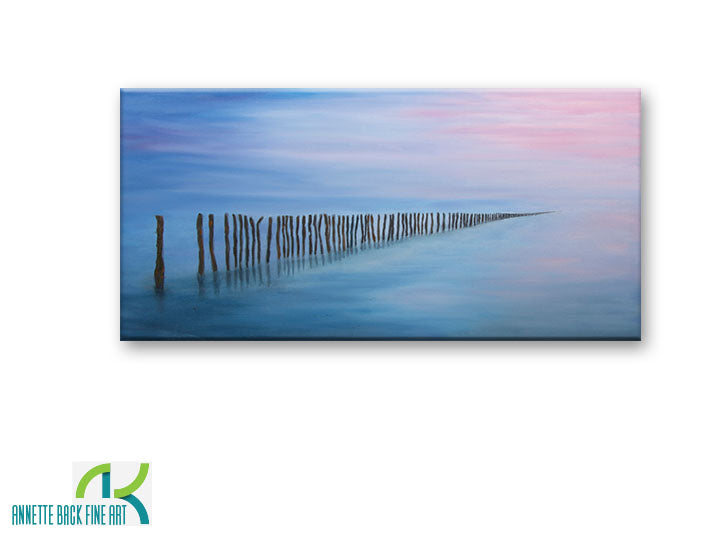
| Wide-format canvas example | Infinity, 48 by 24 inches | Horizontal sweep suits a three-seat sofa |
| Portrait orientation | Narrow walls | Landscape orientation suits wide walls |
Oil Painting Above Sofa Ideas That Hold the Room Together
The sofa wall is the most photographed wall in any home, and it rewards planning. A single wide canvas centered above the sofa is the safest, strongest choice.
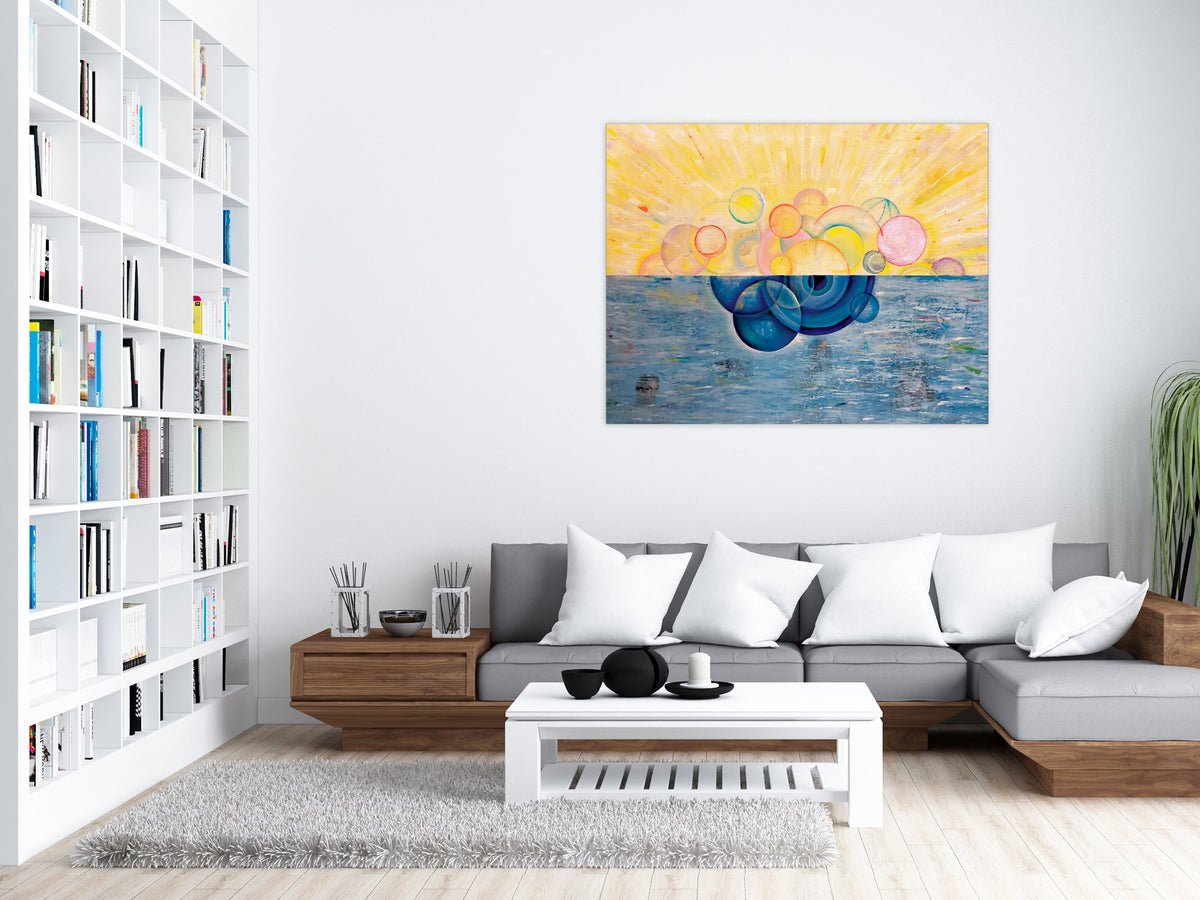
For a grouped look, treat several pieces as one unit. A set of four squares, like our Branches set of four, fills a wide span without the weight of a single oversized canvas.

Scale and Spacing for One Piece or a Group
A common mistake is buying a canvas that is too small for the wall. As a rule of thumb, artwork above a sofa should span about two-thirds of the sofa's width.
If you are working out scale for one large piece, a wide-format canvas such as Infinity, 48 by 24 inches, gives you a horizontal sweep that suits a three-seat sofa.
Where Not to Hang Oil Paintings: Light, Heat, and Moisture Traps
Some walls are off-limits. Direct sunlight fades pigments and can yellow varnish over time. Above a working fireplace, heat and soot do slow damage.
Watch out: hanging a painting on an exterior wall in a humid climate invites condensation behind the canvas, and mildew can set in before you notice any change on the surface.
How to Frame a Canvas Painting Without Hiding Its Texture
Many canvases need no frame at all.
If you do frame, choose a floater frame. It holds the canvas slightly away from the frame's inner edge, so the painted sides stay visible.
Still deciding between an original and a reproduction? Our comparison of original art versus canvas prints explains what each option means for framing and longevity.
Hardware and Wall Safety: Mounting Heavy Canvases Correctly
Most hanging guides stop at "find a stud." A large framed oil painting is a heavy, rigid object with a high center of gravity, and the hardware that holds it deserves the same planning as the wall you chose. This is the part of the job where home hangs most often fail, and it is the part competitors skip.
Know the Weight Before You Choose Hardware
Weigh the piece, not just the canvas. A stretched canvas carries the stretcher bars, the paint film, and any backing; a framed canvas adds the frame, glazing if present, and the hanging wire or D-rings. A common pattern is that a large framed canvas lands well above what a single picture hook is rated for.
Two Points Beat One
A single hook lets a wide canvas pivot and drift off level. Use two hooks set a few inches apart, or a French cleat for heavier pieces, so the load spreads across two anchor points and the painting stays level. D-rings attached to the frame's back, joined by picture wire, are the standard for framed work; sawtooth hangers are for small, light pieces only.
Studs, Anchors, and the Drywall Question
Drywall anchors are fine for light frames, but a heavy canvas belongs in wood studs or a rated anchor system designed for the load.
Watch out: hanging a heavy canvas from a single drywall anchor in a wall you have not checked for studs is the most common cause of a painting coming down, and taking a section of drywall with it.
Damage-Free and Renter-Friendly Options
If you rent or want to avoid large holes, adhesive-backed hanging strips rated for the piece's weight can work for lighter canvases, but they demand a clean, flat, painted surface and full cure time before you hang. For heavy originals, a damage-free approach usually means a floor-leaning display or a picture ledge rather than adhesive alone.
Keeping It Level Over Time
Small frames drift off level as humidity and vibration work on the wire. A dab of museum wax on the hook points, or small adhesive bumpers at the bottom corners, keeps a frame from creeping. Recheck level a few weeks after hanging; new wire stretches slightly under load.
When to Bring In a Pro
If the piece is oversized, the wall is plaster or brick, or you are unsure about the load, a professional installer is the cheaper choice. The cost of one wall repair after a failed hang outweighs the cost of getting it right the first time.
Lighting and Preservation: Protecting Oil Paintings from Sunlight and Climate Shifts
Light and climate are the two slow threats to an oil painting, and both are easy to manage once you understand the mechanism. Most guides cover light and stop there. The preservation angle, humidity, temperature swings, and air movement, is where a living room display either protects a painting for decades or quietly ages it.
How Light Damages Oil Paint
Ultraviolet and visible light break down the pigment molecules and the varnish film. The damage is cumulative and irreversible: colors shift, whites yellow, and varnish can develop a cloudy bloom. Direct sun through a window is the worst case, but even strong reflected light over years adds up. Keep oil paintings off walls that receive direct sun, and rotate pieces away from windows with strong afternoon exposure.
Glazing and UV Filtering
Framed work can use ultraviolet-filtering glazing, which slows but does not stop light damage. Glazing also protects the paint surface from dust and accidental touch. For an unframed gallery-wrapped canvas, the paint film is exposed, so placement matters more, a wall that never receives direct sun is the simplest protection.
Picture Lights Done Right
A picture light adds presence in the evening without washing out color. Aim for warm, low-intensity light, and keep the fixture far enough from the canvas that the surface never feels warm to the touch. Heat from a close fixture is a real risk to varnish and paint film. LED picture lights run cooler than incandescent and are the safer choice for continuous evening use.
Temperature and Humidity: The Mechanism
Oil paint and canvas respond to moisture in the room. As humidity swings, the canvas expands and contracts while the paint film responds more slowly, which can stress the bond between paint and canvas over time.
Watch out: hanging a painting on an exterior wall in a humid climate invites condensation behind the canvas, and mildew can set in before you notice any change on the surface.
Air Movement and the Back of the Canvas
Canvas needs air to breathe. Avoid sealing a painting tight against the wall with no gap, and avoid hanging it where a vent blows directly on it. A small air gap behind the stretcher bars lets moisture equalize and reduces condensation risk.
When to Consult a Conservator
For valuable or antique oil paintings, a conservator can assess light exposure, varnish condition, and climate risk before you commit to a wall. Museum conservation institutes publish guidance on light, temperature, and humidity for paintings that is worth reading before you hang. If a piece shows cracking, flaking, or a cloudy varnish, address it before display rather than after.
A Simple Preservation Checklist
- No direct sun on the canvas.
- No radiator, vent, or AC draft aimed at the piece.
- Stable room temperature and humidity.
- A small air gap behind the canvas.
- Cool LED picture light kept at a distance.
Choosing the Right Piece for Your Living Room
Color palette and composition should echo the room, not fight it.
Original work is a long-term choice. If cost is the sticking question, our piece on whether original painterly art is worth the cost lays out the case plainly.
A piece that starts conversations is the goal.
A living room wall is a commitment, and getting the height, light, and scale right takes more thought than most people expect.
Frequently Asked Questions
Where should you not hang an oil painting?
Avoid hanging oil paintings in direct sunlight, above heat sources like radiators or fireplaces, and in damp areas such as bathrooms. Ultraviolet light fades pigments and dries out the canvas, while heat and moisture can warp the stretcher and encourage mold. Also skip spots with constant temperature swings, like next to an exterior door that opens frequently. A stable interior wall with indirect light is safest for long-term preservation.
How high should an oil painting be hung?
The center of the painting should sit at eye level, roughly 57 to 60 inches from the floor. This standard works for most living rooms because it places the artwork in the natural sightline of seated and standing viewers. If you are hanging above furniture, keep at least 6 to 8 inches of clearance between the bottom of the frame and the sofa or table. Adjust slightly for very tall ceilings or low seating.
Should an oil painting be framed with or without glass?
Oil paintings should never be framed behind glass. Glass traps moisture and prevents the canvas from breathing, which can cause condensation, mold, and paint deterioration over time. Instead, use a frame without glass, or display the canvas unframed if the sides are finished. A floating frame works well for gallery-wrapped canvases because it adds structure without covering the painted edges.
How do you choose the right size oil painting for a living room wall?
A common guideline is that artwork should cover about two-thirds to three-quarters of the width of the furniture below it. For a sofa that is 84 inches wide, look for a painting or grouping that spans roughly 56 to 63 inches. On a blank wall without furniture, measure the wall and aim for a piece that fills 50 to 75 percent of the available width. Scale matters more than exact numbers, so mock up the size with painter's tape before committing.
Can you display an oil painting in a small living room?
Yes, small living rooms can display oil paintings beautifully. Choose a piece that fits the scale of the wall without overwhelming the space, and consider vertical orientations to draw the eye upward. A single statement canvas often works better than a busy gallery wall in a compact room. Keep surrounding decor minimal so the painting remains the focal point, and use a picture light to add depth without taking up floor space.


0 comments