


Quick Summary
To start collecting original art, buy work you genuinely enjoy, set a realistic budget that includes framing and shipping, and begin with hand-embellished prints or limited editions if an original is beyond reach. Visit galleries and open studios, follow artists online, and verify signatures, certificates, and seller records before paying.
- Buy pieces you still enjoy after a few weeks, not work chosen for trends or resale.
- Budget separately for framing, shipping, sales tax, and insurance, not just the artwork price.
- Hand-embellished prints and limited editions offer a lower-cost way to live with an artist's work.
- Visit galleries, art fairs, and open studios to see scale, surface, and color in person.
- Request a certificate naming the artist, title, medium, dimensions, and year before you pay.
Table of Contents
- Why Owning Original Art Differs From Owning Prints
- 1. Trust Your Taste and Buy Work You Enjoy
- 2. Set a Realistic Budget Before You Shop
- 3. Start With Hand-Embellished Prints or Limited Editions
- 4. Visit Galleries, Art Fairs and Open Studios
- 5. Follow Artists Online and Watch Their Work Develop
- 6. Check Authenticity, Provenance and Certificates Before You Buy
- 7. Plan How You Will Display, Frame and Care for Your Purchase
- Frequently Asked Questions
Why Owning Original Art Differs From Owning Prints
Original art is one of a kind. When you buy an original painting, you own the only physical version of that work, signed and dated by the artist. A print, by contrast, is a reproduction made in multiples, even when it is a numbered edition. That difference shapes how you value a piece, how you display it, and how you care for it over time.
Owning an original also means building a relationship with the work itself. You see the brushwork, the layers, and the texture in person, which reproductions rarely capture. Experiences like this vary from person to person, so trust your own reaction when you stand in front of a piece.
If you are weighing whether original work is worth the cost, our article Is Original Painterly Art Worth the Cost? walks through the trade-offs. For a side-by-side look at originals and canvas prints, see Original Art vs Canvas Prints: What Works Best.
1. Trust Your Taste and Buy Work You Enjoy
The best collections start with what you genuinely like. Trends come and go, but a piece you love will still feel right in your home years later. Before you buy, spend time looking at many work. Notice which colors, subjects, and moods keep pulling your attention.
Pay attention to how a piece makes you feel after a few weeks, not just in the first moment of excitement. If a work still holds your eye on an ordinary Tuesday morning, that is a strong sign. Buy for your own space and your own pleasure rather than for resale or for what you think others expect to see on your walls.
2. Set a Realistic Budget Before You Shop
A clear budget keeps you from overspending and makes the search more focused. Decide what you can spend comfortably, then plan for costs beyond the price tag, such as framing, shipping, and installation. Original works vary widely in price, so a budget helps you narrow the field quickly.
Most first-time buyers underestimate the total cost because they budget only for the artwork. A practical approach is to set a ceiling for the piece itself and a separate allowance for everything that follows. Framing, shipping, handling, and any applicable sales tax all add to the total, so factor them in before you commit. If you plan to insure the work, ask your renter's or homeowner's policy provider whether fine art is covered and what documentation they require.
Our current original oil paintings range from $600.00 for a 12x12 inch work to $12,240.00 for a 40x16 inch piece. A smaller work or a set can be a strong first purchase. Prices for our pieces are listed on each product page, so you can compare options against your budget before you fall in love with something out of reach.
A simple starter budget for a first original might look like this: choose a piece within your artwork ceiling, add estimated framing or float-frame cost, add shipping, add applicable sales tax, and hold back a small reserve for insurance or a future rehang. If the total lands above what you can spend comfortably, drop to a smaller size or consider a hand-embellished print or limited edition instead, which lets you live with the artist's work at a lower entry point while you save for an original.
Watch out: a low sticker price can hide high shipping on a large canvas, so confirm the delivered total, not just the list price, before you decide.
3. Start With Hand-Embellished Prints or Limited Editions
If an original is beyond your budget for now, a hand-embellished print or a limited edition is a practical place to start. A hand-embellished print is a reproduction that has been enhanced by hand, adding texture or detail that makes each one slightly different. A limited edition is produced in a fixed, numbered run, so each print has a defined place in the series.
Both options let you live with the artist's work at a lower cost while you learn what you respond to. To see how one of our original paintings looks in practice, view Dancers by Annette Back - 30x30. To understand how contemporary prints and editions differ from originals, read About Contemporary Prints.
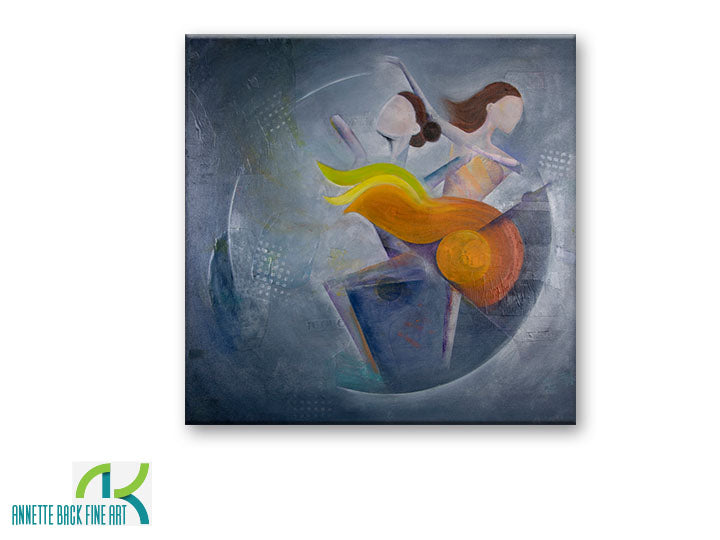
4. Visit Galleries, Art Fairs and Open Studios
Seeing art in person is the fastest way to develop your eye. Galleries, art fairs, and open studios let you stand in front of real work and notice how scale, surface, and color change in person compared with a screen. Ask questions while you are there. Many artists and gallery staff are glad to explain their process and the story behind a piece.
Visiting regularly also helps you recognize the artists whose work you return to. Keep a notebook or a phone album of works that stopped you in your tracks, along with notes on why. Over time, this record becomes a useful guide for your next purchase.
5. Follow Artists Online and Watch Their Work Develop
Following artists on social media and their websites shows you how their work changes over time. You can see new series, studio updates, and exhibition announcements as they happen. This helps you understand an artist's direction before you commit to a purchase.
Online channels also make it easier to compare styles across different artists. Save posts and pieces you like in one place, and revisit them after a few months. You may find that your preferences have shifted, which is useful information for building a collection with purpose.
6. Check Authenticity, Provenance and Certificates Before You Buy
Before buying, confirm that the work is an original by the artist you expect. Look for a signature, a date, and clear documentation describing the medium and dimensions. Ask the seller how the piece was packed and shipped, and what condition it arrived in. Keep every invoice, certificate, and piece of correspondence in a dedicated folder.
A practical first-purchase checklist helps you evaluate an artwork, a seller, and its paperwork in sequence before you pay:
- The work itself: confirm the signature and date, check the medium and dimensions against the listing, and ask for close-up photos of the surface, edges, and any frame.
- The documentation: request a certificate of authenticity that names the artist, the title, the medium, the dimensions, and the year. Ask whether the certificate is issued by the artist or the gallery, and keep the original.
- The seller: buy from the artist directly or from a gallery with a clear reputation. Ask how long they have represented the artist and whether they offer a written return policy.
- The condition report: ask for a written description of any prior restoration, repairs, or flaws, and photograph the work on arrival before you hang it.
- The paper trail: keep the invoice, certificate, shipping records, and correspondence together so a future insurance claim or resale is straightforward.
Provenance, meaning the record of who has owned a work, can matter for later resale. For a first purchase, the certificate and invoice are usually enough; for a piece you intend to hold long term, ask the seller to note the chain of ownership in writing. Our original paintings are signed and dated by the artist, and each product listing states its medium and size.
Watch out: a certificate that lists only the title and artist, with no medium, dimensions, or year, is weak evidence. Ask for a complete one before you pay.
Before you pay, the checklist below sets out what to verify on the artwork, the documentation, and the seller.
| Check | What to confirm | Watch for |
|---|---|---|
| The work itself | Signature, date, medium, dimensions | Missing signature or date |
| Documentation | Certificate naming artist, title, medium, dimensions, year | Certificate with only title and artist |
| Seller | Buy from artist or reputable gallery; written return policy | No clear return policy |
| Condition report | Prior restoration, repairs, flaws noted in writing | Undisclosed prior repairs |
| Paper trail | Invoice, certificate, shipping records kept together | Lost or incomplete records |
7. Plan How You Will Display, Frame and Care for Your Purchase
Think about where a piece will hang before it arrives. Measure the wall, consider the room's light, and choose a height that suits the work. Original canvases can be displayed in many ways, which keeps the focus on the painted surface.
Care is straightforward. Professional framing services arranged by the artist are available, so ask about options before you order. A thoughtful display plan protects your investment and lets the work look its best for years.
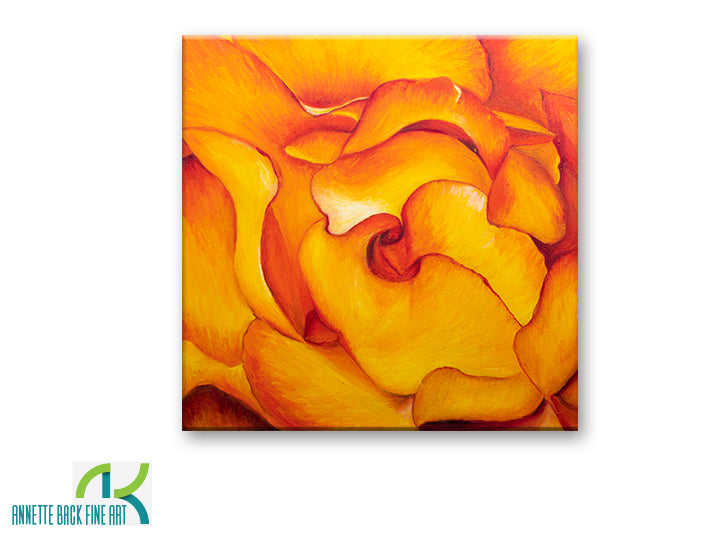
Our pieces, such as Fire & Rose by Annette Back - 20x20, are available in a range of sizes for display in your home. Layouts like the one shown in our photo of four square canvases on a cabinet show how a grouping can work in a living space.
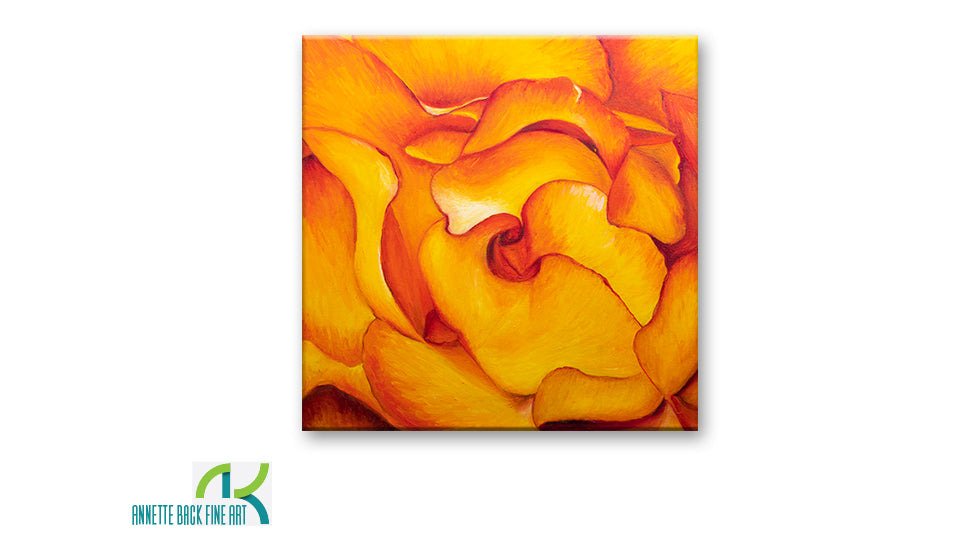
Ready to start your collection? Explore original paintings, prints, and sets from Annette Back Fine Art, and find a piece that fits your space and your budget. Our team can answer questions about sizing, packing, and shipping before you buy.
Frequently Asked Questions
How do I begin collecting original art?
Start by looking at a wide range of work in galleries, fairs and online, and noting what holds your attention. Set a budget you can afford without strain, then choose one or two pieces you would enjoy living with for years. Buy from artists or galleries that provide clear documentation, including the artist's signature, the date, the medium and dimensions. Your first purchase matters less than the habit of looking closely and buying with intention.
What is the difference between a giclée print and an original artwork?
An original artwork is a single piece made directly by the artist, such as an oil painting on canvas, and it exists in only one copy. A giclée print is a high-quality reproduction made with a digital inkjet process, and many copies can be produced from the same image. Giclée prints can be beautiful and affordable, but they do not carry the unique value of the artist's own mark on a single work. Ask the seller to state clearly which type you are buying.
What does hand-embellished mean on a print?
A hand-embellished print is a reproduction that the artist has finished or altered by hand, usually with paint, ink or other marks added on top of the printed image. Each embellished piece therefore differs slightly from the others in the edition. It sits between a straight print and a fully original painting in both price and uniqueness. Confirm with the seller how much hand work was done and whether each piece is signed and numbered.
How should I hang and display original art at home?
Hang artwork so the centre of the piece sits at about 57 to 60 inches from the floor, which is roughly eye level for most adults. Above a sofa or console, leave about 6 to 10 inches between the bottom of the frame and the furniture. Use good lighting that avoids direct sun, since strong light can fade paint and colour over time. Keep original works away from heat sources and damp walls, and check the hanging hardware regularly.


0 comments