


Last Updated: November 6, 2026
Quick Summary
Incorporating mixed media canvas into interior design starts with the wall, not the artwork: measure the space, note the light, and match the piece to the room's job. Hang one strong focal point per room at eye level, roughly 57 to 60 inches to the canvas center, and light the surface at an angle so the layers show.
- Measure the wall, light direction, and existing accent color before you shop for art.
- Canvas should span roughly two-thirds to three-quarters of the furniture below it.
- Above a sofa, leave 6 to 10 inches between the sofa top and the canvas bottom.
- In a bedroom, center a single piece on the mattress at 48 to 54 inches to center.
- Dust textured work with a soft dry brush and keep it out of humid rooms.
Table of Contents
- Why Mixed Media Canvas Art Changes a Room
- How to Choose Art for Your Home Before You Shop
- Mixed Media Art Examples That Show What to Look For
- Limited Edition Art Prints vs. Original Canvas Work
- How to Hang Canvas Art: Height, Scale, and Safe Installation
- A Room-by-Room Placement Guide for Mixed Media Canvas Art
- Lighting, Care, and Long-Term Durability
- Choosing Your Piece and Planning the Wall
- Frequently Asked Questions
Why Mixed Media Canvas Art Changes a Room
Mixed media canvas art is artwork built from more than one material, usually acrylic paint combined with collage, text, photography, or layered texture on canvas.
At Annette Back Fine Art, our work combines photography, text, and vibrant colors to create meaningful narratives.
Paint alone sits flat on a wall. Mixed media gives the eye something to explore, and that depth is what makes a room feel designed rather than decorated.
How to Choose Art for Your Home Before You Shop
Choosing art for your home starts with the wall, not the artwork. Measure the space, note the light, and decide what the piece needs to do before you open a single gallery page.
Most buyers do this backwards. They fall for an image online, then discover it fights their sofa or disappears against their wall color. A little planning first saves a return later.
Start With the Wall, Not the Frame
Walk into the room and stand where you will actually see the art. Note three things:
- Wall width: the art should span roughly two-thirds to three-quarters of the furniture below it.
- Light direction: a window to the side reveals texture; direct sun can fade color over time.
- Existing color: pull one accent color from the room and look for art that echoes it.
Once you know the wall, the shopping gets faster. You are no longer browsing everything, just the pieces that fit.
Mixed Media Art Examples That Show What to Look For
Good mixed media art examples share one trait: you can see the layers doing work. Look for visible texture, embedded text or imagery, and edges that feel built rather than printed.
Our own work follows this approach. A piece like the In Bloom Limited Edition Hand Embellished Gallery Wrap shows how hand-applied detail sits on top of a printed base, so the surface has real dimension.

Here is what separates strong mixed media from flat imitation:
- Visible layering: you can trace where one material ends and another begins.
- Text as texture: words woven into the background, not pasted on top.
- Hand work: brushstrokes or embellishment you can feel with your eye.
If a piece looks like a single flat image from every angle, it is probably a straightforward print, not mixed media.
Limited Edition Art Prints vs. Original Canvas Work
Limited edition art prints are produced in a set number and are offered alongside original paintings. Hand embellished prints add painted detail on top of the printed image.
Original canvas work is a single piece, painted by hand.
If you are weighing whether original painterly work justifies the cost, our article on whether original painterly art is worth the cost breaks down the value question. Buyers also considering figurative pieces as an investment can read whether original figurative art is worth the investment.
A simple rule: choose a print when you love the image and want a specific size; choose an original when you want a piece no one else owns.
How to Hang Canvas Art: Height, Scale, and Safe Installation
Hanging canvas art well comes down to three numbers: center height, scale relative to furniture, and hardware rated for the canvas weight. Get those right and the piece looks intentional.
The most common mistake is hanging too high. Art should relate to the furniture below it, not float near the ceiling.
Hanging Height and Hardware Basics
Center the artwork at eye level, generally around 57 to 60 inches from the floor to the middle of the canvas. Above a sofa, leave about 6 to 10 inches between the top of the sofa and the bottom of the frame.
Herzl Sees You by Annette Back →
For hardware:
- Lightweight canvas: a single hook or sawtooth hanger works.
- Medium canvas: two hooks spaced apart keep it level.
- Heavy or large canvas: wall anchors rated for the weight, or a French cleat.
Check the wall for studs before drilling, and use anchors in drywall. If you are still choosing pieces to hang, browse framed prints to find sizes that fit your measured wall.
A Room-by-Room Placement Guide for Mixed Media Canvas Art
Placement changes how mixed media reads. A textured canvas in a bright living room shows its layers; the same piece in a dim hallway goes quiet.
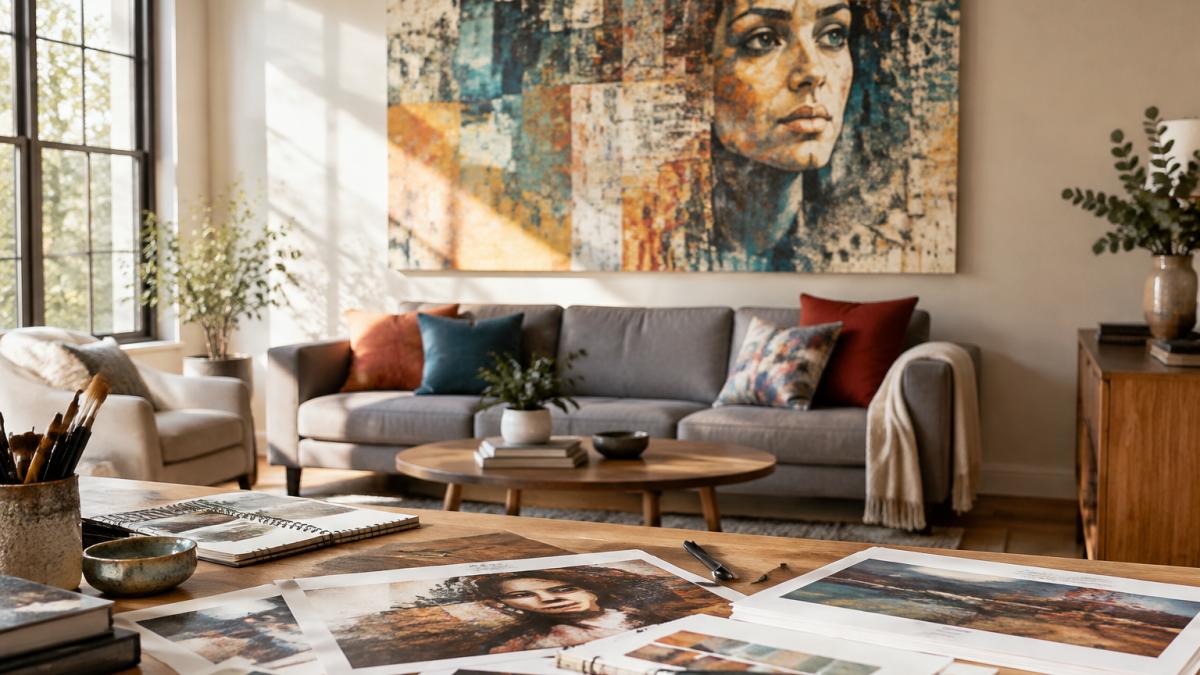
Before the room list, one sizing rule carries across every space: the canvas should span roughly two-thirds to three-quarters of the furniture below it, and the bottom edge should sit about 6 to 10 inches above the sofa back, tabletop, or headboard. Center height stays near 57 to 60 inches from the floor to the middle of the canvas. Those three numbers do most of the work; the room notes below adjust them.
- Living room: one large focal canvas above the sofa, sized to the sofa width rather than the wall width. On a 90-inch sofa, a canvas in the 60- to 68-inch range hits the two-thirds mark. A three-piece set like I Am Woman By Annette Back 12x30 Set Of 3 suits a long wall behind seating because the gaps between panels let the wall color breathe. Keep the set's total span within the same two-thirds rule and space panels 2 to 3 inches apart.
- Bedroom: a single piece across from the bed, centered on the mattress rather than the wall, at eye level when you sit up (roughly 48 to 54 inches to center). Mixed media with heavy texture reads well here because you view it at a distance and at an angle, which is exactly when layered surfaces catch side light.
- Dining room: a horizontal canvas centered over the table, scaled to the table width, not the room. Leave 30 to 36 inches of clearance between the tabletop and the bottom of the canvas so seated guests are not looking up at a low edge. A long horizontal suits the table's line; a square canvas fights it.
The goal is one strong focal point per room. Two competing canvases split attention; one well-placed piece holds the room.

Watch out: direct sun can fade pigment over time, so check the light before you commit to the wall.
Here is how the key placement numbers shift from room to room.
| Room | Placement | Key measurement |
|---|---|---|
| Living room | One large focal canvas above the sofa | Canvas 60 to 68 inches on a 90-inch sofa |
| Living room set | Three panels behind seating, spaced 2 to 3 inches apart | Total span within two-thirds rule |
| Bedroom | Single piece across from bed, centered on mattress | 48 to 54 inches to center |
| Dining room | Horizontal canvas centered over the table | 30 to 36 inches tabletop clearance |
| Hallway | Smaller piece or tight pair where a person pauses | Strong raised texture for short viewing distance |
| Home office | Where you look up from the screen, not behind you | Avoid video-call backdrops |
Lighting, Care, and Long-Term Durability
Mixed media lasts when you control light and handle the surface gently. Texture and layered materials are more sensitive than a flat print because raised areas catch light at an angle and collect dust in the valleys, so the same care routine that keeps a flat print clean can leave a textured canvas looking dull.
Lighting the Surface, Not Just the Wall
The point of lighting mixed media is to graze the surface so the layers cast small shadows and the texture becomes visible. A light aimed straight at the canvas flattens it; a light angled from above or the side reveals it.
- Picture lights mounted above the canvas throw light down the face and are the most reliable way to show texture. Choose one rated for the canvas width so the light spreads evenly rather than pooling in the center.
- Ceiling spots work when they can be aimed at a steep angle across the surface. A spot aimed perpendicular to the wall produces glare on glossy or varnished areas and hides the very texture you want to see.
- Natural light from a side window is the best texture revealer, but direct sun is the enemy. UV light fades pigment over years, and heat can stress layered surfaces. Sheer curtains or UV-filtering window film cut the damage without killing the side light.
Care and Long-Term Durability
The practical routine:
- Dust with a soft, dry brush or microfiber cloth, working gently across the raised areas rather than pressing into them. Never use a wet rag; moisture can lift pigment or soften adhesives in collage layers.
- Keep the piece out of humid rooms like bathrooms unless it is properly sealed. Sustained humidity is the most common cause of warping and mold on canvas, and layered materials trap moisture differently than a flat print.
- Handle by the frame or the canvas edges, never the painted face. Oils from skin can dull a matte surface and are difficult to remove without disturbing the texture.
Professional framing is available through the artist, arranged to protect the work from the start.
Choosing Your Piece and Planning the Wall
Start with the wall, pick the piece that fits it, hang it at eye level, and light it well.
Mixed media canvas rewards that planning. Hanging height, light, and scale all affect how the layers read in the room.
If you are unsure how a piece will look in your space, ask about a virtual live viewing before you commit.
Frequently Asked Questions
What is the 3-5-7 rule in interior design, and does it apply to mixed media canvas art?
The 3-5-7 rule is a styling guideline for grouping objects in odd numbers, usually three, five, or seven, because odd groupings feel more natural to the eye. You can apply it to mixed media canvas by clustering one large piece with two smaller accents, or arranging five frames on a gallery wall. It is a starting point, not a strict requirement. What matters more is that the scale and spacing feel balanced against the furniture below.
Can mixed media canvas art work in a small room?
Yes, and it often works better than people expect. A single bold mixed media canvas can act as a focal point and give a small room a clear identity. Choose a piece sized to the wall rather than the room, leaving at least a few inches of breathing room on each side. Lighter backgrounds and cooler palettes keep the space feeling open, while heavily textured pieces add depth without requiring extra furniture.
How do I know the colors in a limited edition art print will match my room when it arrives?
Ask for additional photos or a video of the piece in natural light before you buy, and compare those to your wall color in daylight rather than under lamps. Reputable sellers will provide these on request. If you are working with Annette Back Fine Art, virtual live viewing and consultation services let you see the work in real time and talk through how it will sit in your space before committing.
How do I mix art styles in a room without it looking cluttered?
Pick one anchor piece, usually the largest work, and let the others support it through shared color or tone rather than shared style. A figurative mixed media canvas can sit alongside a minimal abstract print if both pull from the same palette. Keep frames consistent or deliberately contrasting, and leave enough empty wall between pieces so each one reads on its own. The goal is conversation between works, not competition.
A room can have beautiful furniture and still feel unfinished until the right piece goes on the wall. Annette Back Fine Art can help you close that gap with original paintings and limited edition prints, virtual live viewing and consultation, and professional framing arranged for you. Get started with Annette Back Fine Art and give your wall a piece that holds the room together.


0 comments