


Quick Summary
To build a small collection around one artwork, start by choosing an anchor piece you truly love and measure the wall before buying. Then add companion works that share at least two threads with it, such as color, subject, or mood. Buy slowly, living with each pair before adding another piece.
- Choose the anchor first, since every other piece will relate back to it.
- Mark the anchor's outline on the wall with painter's tape before buying.
- Each companion piece should connect to the anchor on at least two of four threads.
- Mix originals and prints by hanging the original at the center and prints around it.
- Live with each new pair for a while before adding a third piece.
Table of Contents
- Start With an Anchor Piece You Love
- How to Choose Art That Goes Together
- Pulling Colors and Subject Matter From the Anchor
- How to Mix Original Art and Prints
- How to Arrange Pictures on a Wall of Different Sizes
- Gallery Wall Ideas for a Small Space
- Your Next Step: Planning Your First Anchored Collection
- Frequently Asked Questions
Start With an Anchor Piece You Love
Last Updated: November 19, 2026
Building a small collection around one artwork starts with a single piece you truly love. A strong anchor piece sets the tone for everything that follows. The good news is that you do not need a large budget or a big house to get this right.
Why the anchor should come first
Choose the anchor before anything else. Every other piece you add will relate back to it, so the choice matters more than it seems.
Pick something that makes you pause when you walk into the room. If a piece holds your attention for a few seconds each time you pass it, it is probably the right one.
- Choose work that speaks to you, not to a trend
- Look for color, subject, or mood you return to often
- Consider original work if you want a piece that is truly one of a kind, and read whether original painterly art is worth the cost before you commit.
A common mistake is buying several smaller pieces first and hoping they will add up to a focal point. They rarely do. Start with the strongest piece you can afford, then build around it.
Checking scale and wall space before you buy
Measure the wall before you fall in love with a piece. Mark the outline with painter's tape so you can see how much space it takes up.
A good rule of thumb is to leave clear wall space around the piece. The art should feel like it belongs on the wall, not crowded into it.
- Measure the wall height and width
- Tape the piece's dimensions onto the wall
- Stand back and check the view from the sofa or doorway
How to Choose Art That Goes Together
Once you have an anchor, the next step is finding pieces that feel related without matching exactly. Visual cohesion comes from shared color, mood, or subject, not from identical frames. A small collection tends to read as intentional when at least two of those threads repeat across the works, while the rest is allowed to vary.
Read the anchor before you shop
Before you look at another piece, write down four things about your anchor: its three most dominant colors, its subject or gesture, its medium and surface texture, and the mood it gives off. Keep that list with you when you browse. Every candidate piece should connect on at least two of the four. A work that matches only one thread tends to look like an outlier once it is on the wall.
Build cohesion through threads, not matches
Collection cohesion beyond matching colors is where most small collections either succeed or fall apart. You can connect works through subject (figures, branches, landscapes), through period or style, through technique (brushwork, impasto, line quality), through scale, or through a personal narrative such as a place or a season you return to. Allowing one thread to vary keeps the group from looking like a catalog page.
- Repeat one or two colors from the anchor, not all three
- Let subject connect emotionally rather than literally
- Keep frame finishes consistent even when sizes and orientations vary
- Allow one deliberate contrast piece to keep the group from feeling flat
A practical acquisition sequence
Buying slowly is the advice every article gives; here is the sequence that makes it work. First, live with the anchor alone for a few weeks and note which wall it wants. Second, identify the single thread you want the collection to carry, whether that is color, subject, or mood. Third, add one companion work that shares two threads with the anchor. Fourth, live with the pair before adding a third. Fifth, decide in advance what would make the collection feel complete, such as a set number of works or a wall that is fully resolved, so you stop buying out of momentum rather than intention.
Watch out: buying several pieces in one shopping session almost always produces a group that matches on color but not on mood, and the mismatch becomes obvious once the works are hung together.
Research before you commit
Collection-building concerns go beyond decor. Ask whether the work is an original, a limited edition, or an open edition, because that distinction affects both how it relates to your anchor and how you will care for it. A piece with unclear provenance is rarely worth the risk in a small, deliberate collection.
Pulling Colors and Subject Matter From the Anchor
Take a close look at your anchor piece and note the three most dominant colors. Then look for smaller works that echo one or two of them.
Subject matter works the same way. If your anchor features figures, a smaller piece with a similar gesture or mood can link the two without repeating the exact image.
Pulling color and subject from one piece is what turns a group of art into a small collection.
How to Mix Original Art and Prints
Originals and prints can live together well, and mixing them is a practical way to build a collection on a budget. Original paintings carry texture and presence, while limited edition prints give you a related image at a lower cost. The key is understanding what each type actually is, so the mix feels deliberate rather than like a compromise.
Know what you are hanging
A giclee print is a high-resolution reproduction printed with pigment-based inks on archival paper or canvas. A limited edition print is a giclee or other fine-art print produced in a fixed, numbered run, usually signed and numbered by the artist, after which the edition is closed. An open edition print has no fixed run and can be reprinted indefinitely, which makes it the least collectible of the three. A hand embellished print starts as a giclee or limited edition print that the artist then adds paint, texture, or brushwork to by hand.
Build a tiered collection
Treat the three types as tiers and let the anchor sit at the top. Use the original as the anchor and place prints around it, keeping the prints in the same palette so they feel like a family.
- Hang the original at the center of the grouping
- Add limited edition prints in matching colors
- Consider a hand embellished piece for added texture
- Reserve open edition prints for filler or rotation rather than the core group
Match the frame and mat to the type
Keep frame finishes consistent across the group even when the works themselves differ in type, and use the same mat width on prints so the eye reads them as a set.
Care differences that affect the mix
Originals and prints age differently. Pigment-based giclee prints are sensitive to direct sunlight and will fade over time, so keep them off walls that receive strong afternoon sun or use UV-filtering glazing. Original paintings on canvas are more tolerant of light but still benefit from indirect light and stable humidity. Handle prints by the edges only, and store any works not currently hanging flat, interleaved with archival tissue, away from damp basements and hot attics.
The three types of work differ in how they are made, how many copies exist, and how they should be cared for.
| Type | How it is made | Collectibility |
|---|---|---|
| Giclee print | High-resolution pigment-based print on archival paper or canvas | Reproduction |
| Limited edition print | Fine-art print in a fixed, numbered run, signed and numbered by the artist | Edition closed after run |
| Open edition print | Printed without a fixed run, reprintable indefinitely | Least collectible |
| Hand embellished print | Print with paint, texture, or brushwork added by hand | Unique additions per piece |
How to Arrange Pictures on a Wall of Different Sizes
Mixed sizes are easier to arrange than they look. Start with the largest piece, then place smaller works around it.
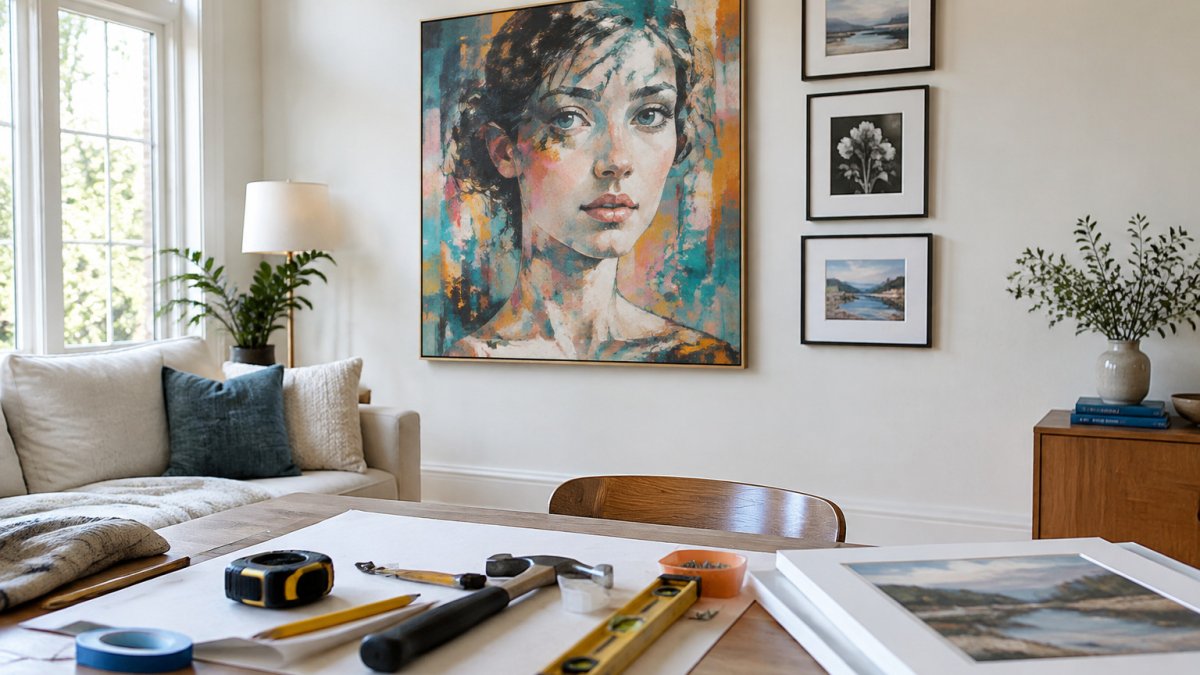
Here is a simple process to follow:
- Lay the pieces on the floor first to test layouts
- Keep spacing between frames roughly equal
- Align the bottom edges or the center line for a clean look
- Step back and adjust until the group feels balanced
Gallery Wall Ideas for a Small Space
A small space still works beautifully with a focused grouping. Two or three pieces are often enough to create a gallery feel.
Try a vertical arrangement above a narrow console, or a horizontal line above a sofa. In a small room, keep the grouping tighter and let the anchor carry most of the visual weight.
Your Next Step: Planning Your First Anchored Collection
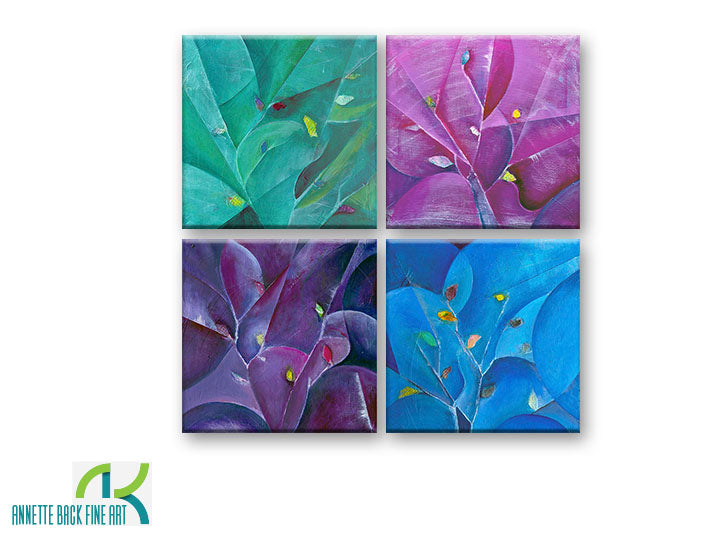
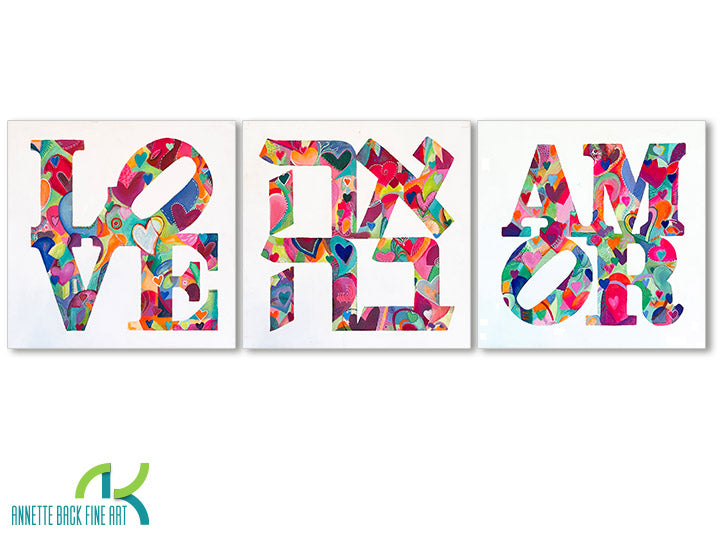
Start by choosing one anchor piece, measuring the wall, and selecting two or three companion works that share its colors. Explore the Branches by Annette Back -12x12, set of 4 or browse Love Is In The Air by Annette Back for companion pieces.
Annette Back Fine Art can help you plan a collection that suits your space and your taste. Get started with Annette Back Fine Art and build a collection around one piece you love.
Frequently Asked Questions
What is the 70/30 rule in art?
The 70/30 rule is a common guideline for balancing a room's visual weight: about 70 percent of the space is given to a dominant element, such as a large anchor artwork, and about 30 percent to supporting pieces. Applied to a small collection, one larger original can carry the wall while smaller prints fill in around it. The rule is a starting point rather than a strict requirement, so trust your eye once the pieces are on the wall and adjust spacing and placement until the grouping feels settled.
How do you build an art collection around one artwork?
Start with the piece you love most and let it set the direction. Note its dominant colors, subject matter, and mood, then look for two or three companion pieces that echo one of those qualities. Buy in small steps, live with each addition for a few weeks, and check how it sits beside the anchor before committing. Keeping the list of decisions short makes the collection feel intentional rather than accidental.
How do you mix original art and prints in a small collection?
Original works and prints can share a wall when they share a palette or theme. Place the original as the anchor, since its texture and brushwork give it presence, and use prints such as limited edition giclee reproductions to extend the color story around it. Matching frame finishes and mat widths helps the mix look cohesive, and the difference in material is usually less noticeable once the pieces are grouped together.


0 comments