


Last Updated: November 19, 2026
Quick Summary
Fine art shipping protects artwork with three layers: acid-free surface protection, cushioning padding, and a sturdy outer box. Standard boxes are not built for paintings, canvas, or framed prints, which can crack, crease, or chip in transit. Matching the wrap to the piece's construction keeps it safe on its way to your home.
- Use acid-free tissue or glassine as the first wrap, never plain newsprint or plastic.
- Keep tape off painted surfaces and anchor it only to protective wrap or back edges.
- Protect framed glass with corner guards and cushion the glazing side away from pressure.
- Fill every void so the package cannot shift when gently tilted.
- Choose a thick, double-wall box with at least two inches of cushioning on every side.
Table of Contents
- Why Fine Art Shipping Needs More Than a Standard Box
- Choosing Packing Materials for Your Artwork
- Wrapping Paintings, Prints, and Framed Pieces
- Selecting a Sturdy Box and Reinforcing the Edges
- Packing Framed Artwork and Protecting the Glazing
- Domestic Shipping, Declared Value, and Insurance Exclusions
- How to Hang Your Artwork After It Arrives
- Next Steps for Your Original Piece or Custom Commission
- Frequently Asked Questions
Why Fine Art Shipping Needs More Than a Standard Box
A painting is not a parcel. Canvas flexes, paint layers crack, and frames chip at the corners the moment they meet a rough handler or a shifting truck. Secure and careful fine art shipping for home decor starts with accepting that a standard box is not built for this job.
Careful packing matters most with original work, which has no second copy. Whether you are buying a single original or a limited edition print, knowing how the artwork is protected helps you judge what arrives at your door.
Think of the package as a system with three layers: the surface protection touching the artwork, the padding that absorbs knocks, and the sturdy outer container that carries the load. Each layer does a different job, and a weak link in any one of them can undo the rest.
Choosing Packing Materials for Your Artwork
The right materials depend on what the piece is made of. Paper, canvas, wood frames, and glass all react differently to pressure, moisture, and friction, so no single wrap fits everything. A more useful approach is to match the wrap to the construction of the piece, because a stretched canvas and a glass-fronted framed print fail in completely different ways.
Here is a quick way to think about material choices by construction:
- Paper-based prints (giclee, limited edition): need a flat, rigid backing and a clean sleeve. A print that is allowed to bow will crease along the roll line, and a crease in a limited edition print cannot be pressed out without risking the image surface.
- Stretched canvas: needs protection on the front surface and space behind the stretcher bars. The canvas face is the vulnerable side, but the back of the stretcher can also press through if the package is dropped flat.
- Framed pieces with glazing: need corner protection and glazing support. The frame carries the load, and the glazing is the part most likely to crack.
- Original paintings: need the most careful surface protection of all, because thick impasto and textured brushwork can be flattened by direct contact.
- Hand embellished prints: sit between a print and an original. The embellished surface is raised and can be marred by friction, so treat the face like an original painting even though the substrate is paper.
Archival and acid-free materials
Archival and acid-free materials matter because ordinary packing paper contains acids and lignin that can slowly stain or weaken artwork. Acid-free tissue and archival-grade boards are designed to stay neutral over time, so they will not leave marks on the surface.
Use these materials as the first wrap, before any bubble wrap touches the piece. Many packing mistakes come from wrapping an artwork directly in newsprint or a plastic bag, which can trap moisture and transfer ink or residue. Glassine is a good first layer for prints and works on paper because it is smooth and does not abrade the image.
Protecting painted surfaces from direct contact
Paint is the most vulnerable part of an original. Compare the original oil paintings available to see which textured surfaces need this care most, see original oil paintings. Even soft bubble wrap can press into thick textured layers, and tape can lift paint if it touches the surface directly.

Place a glassine or acid-free sheet over the painted face first. Keep all tape off the artwork itself and anchor it only to the protective wrap or the back edges. Never let plastic sit flat against paint, because trapped moisture can cause surface damage over the course of a long trip.
Watch out: bubble wrap placed directly against a hand embellished print can leave a faint dimpled pattern in the raised medium, and that pattern is often permanent.
A packaging decision guide by size, value, and fragility
Rather than overpacking a small print or underprotecting a large canvas, use a simple decision path. For a small unframed print of modest value, a rigid mailer with an acid-free sleeve and two stiff boards is usually enough. For a mid-size framed print, move to a double-boxed carton with corner guards and glazing support. For a large stretched canvas or a high-value original, a custom crate or a double-boxed carton with a rigid face board is the safer choice. The rule of thumb most practitioners follow is that the more the piece can flex, the more rigid the outer container needs to be.
Wrapping Paintings, Prints, and Framed Pieces
Wrapping is where most damage gets prevented or caused. A careful wrap holds the piece still so it cannot slide, rub, or bend during transit.
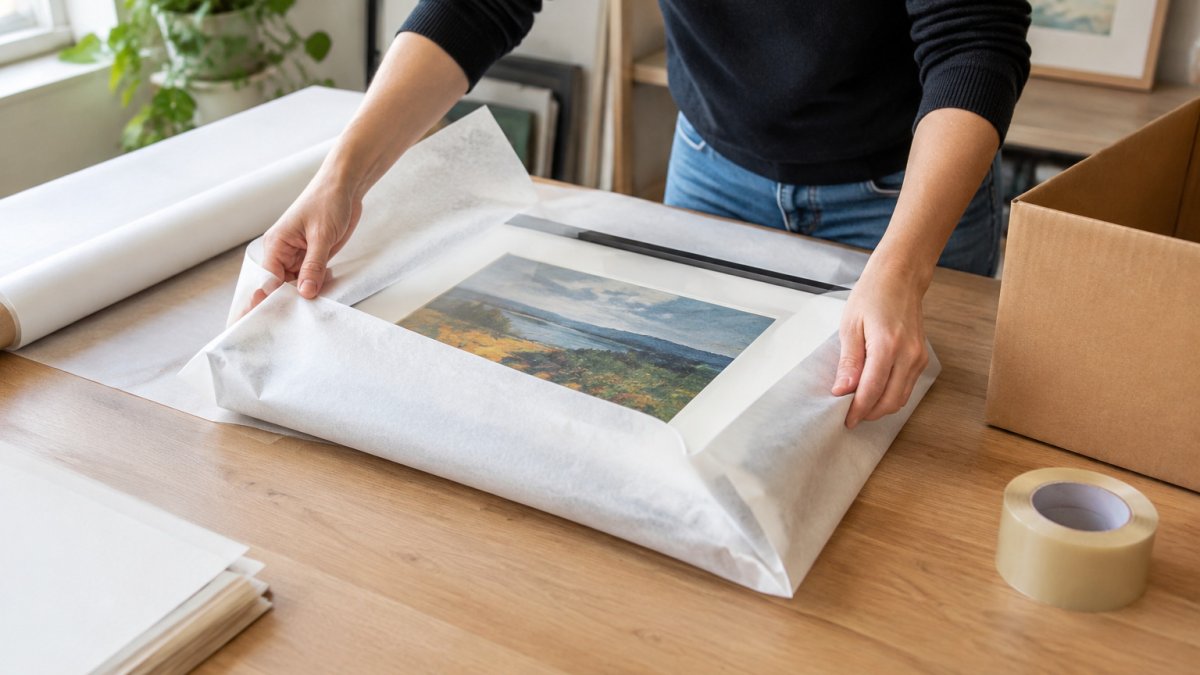
Start by laying the artwork face up on a clean, flat surface. Add the protective sheet, then the padding, then a rigid board on each side for stiffness. Secure everything so nothing moves when you gently shake the package.
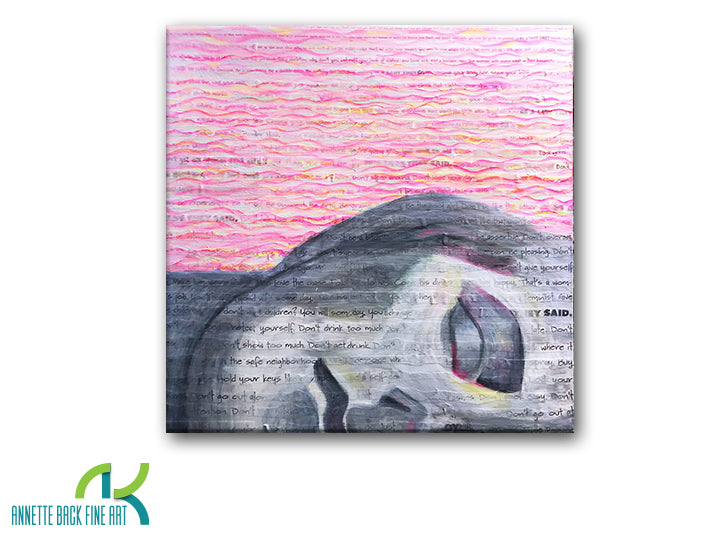
For framed pieces, add corner protectors before wrapping. Corners take the most impact, so guarding them keeps the frame from splitting or chipping. For canvas works without frames, leave a small gap behind the stretcher bars so the canvas can sit without being pressed flat. See how a finished, hand-presented work is styled to picture the result.
Selecting a Sturdy Box and Reinforcing the Edges
The outer box is your last line of defense. Choose one with a thick, double-wall board and enough room for at least two inches of cushioning on every side. A box that is too tight leaves nothing to absorb impact, and one that is too large lets the artwork shift.
Reinforce the edges and seams with extra tape, and consider double boxing for larger or higher-value pieces. Double boxing means placing the wrapped artwork inside a slightly larger box, filling the gap with padding, and then sealing the outer box. The inner box keeps the artwork centered even if the outer box takes a hard knock.
Mark the box clearly as fragile and label the top and sides so handlers know which way is up.
Preventing movement inside the package
A box that is well padded but still lets the artwork slide will fail on a long trip. Fill every void with cushioning so the wrapped piece cannot shift when the sealed box is gently tilted. Foam corner blocks, crumpled acid-free paper, and air pillows all work, but the fill must reach the corners, not just the center. If you can hear or feel movement when you tilt the box, add more fill before sealing.
Reinforcing corners and edges
Corners take the most impact in transit. Add rigid corner protectors to framed pieces before they go into the box, and run a strip of tape around each outer corner of the carton to resist crushing. For oversized pieces, a custom crate with wood bracing at the corners is more reliable than a cardboard carton alone.
Climate, moisture, and temperature protection
Humidity and temperature swings affect different media in different ways. Works on paper can cockle or develop foxing when moisture is trapped, canvas can slacken or tighten as humidity changes, and glazing can fog with condensation when a cold package is opened in a warm room. A common pattern is to let a sealed package come to room temperature before opening it, so condensation forms on the box rather than on the artwork.
Watch out: sealing an artwork in plastic without an acid-free layer first can trap moisture against the surface and cause staining or mold during a long shipment.
Shipping large or oversized artwork
If a piece is too large for a standard carrier, ask about freight or specialized art handling before you seal the box.
The right packing approach depends on the construction of each piece, and the article summarises how each type should be protected.
| Artwork type | Protection focus | Key packing step |
|---|---|---|
| Paper-based prints (giclee, limited edition) | Flat rigid backing | Clean sleeve, keep flat to avoid creases |
| Stretched canvas | Front surface and stretcher bars | Protect face, leave gap behind bars |
| Framed pieces with glazing | Glass and corners | Corner protectors, glazing support |
| Original paintings | Painted surface | Glassine or acid-free sheet, no tape on paint |
| Hand embellished prints | Raised medium | Treat face like an original painting |
Packing Framed Artwork and Protecting the Glazing
Glass is the biggest hazard in framed work. If it cracks, it can cut the artwork and damage the frame, so protecting the glazing is essential.
Apply painter's tape in an X across the glass to help hold fragments in place if it breaks, though this is a backup, not a replacement for good padding. Then wrap the whole piece in protective sheets and cushion the glass side with foam or cardboard so it never takes direct pressure.
Place the framed piece vertically in the box, glass side facing the padding rather than the box wall. Fill any gaps so the frame cannot slide, and avoid stacking anything heavy on top of the package.
Domestic Shipping, Declared Value, and Insurance Exclusions
Read the carrier's insurance terms carefully before you ship, and keep photos of the packed artwork and the sealed box, since documentation helps with any claim. To understand what a print edition is and why its value matters, read about contemporary prints.
How to Hang Your Artwork After It Arrives
Once the box arrives, open it carefully on a clean, flat surface. Inspect the artwork for any damage and photograph the condition right away, so there is a record if a problem needs attention.
When you are ready to hang, use hardware rated for the weight of the piece, and mount it on a wall stud or a proper anchor. Hang the piece at a comfortable eye level, and keep it out of direct sunlight to protect paint and prints from fading over time.
Next Steps for Your Original Piece or Custom Commission
Careful packing protects the artwork you have already chosen. If you are still deciding between an original and a print, or planning a custom commission, you can explore the work, ask questions, and get guidance on what fits your home. Our buying original art online versus prints guide walks through the choice step by step.
Get in touch with Annette Back Fine Art for current details on shipping options and a consultation on protecting your investment. Pricing depends on the piece, its size, and delivery location, so contact the studio directly for an accurate quote.
Frequently Asked Questions
What is the safest way to ship artwork?
Keep the box from shifting by filling voids completely, and check the carrier's terms before you ship.
How should I pack a framed print for shipping?
Start by covering the glazing with a protective layer and taping it in an X pattern. Wrap the frame in archival paper, then add bubble wrap or foam padding around all edges and corners. Place the piece in a double-walled box sized so the artwork cannot move inside. Fill empty space with void fill and seal all seams with packing tape. Label the package clearly as fragile and keep a record of the packing condition with photos in case you need to file a claim.
Does shipping insurance cover fine art damage?
Insurance coverage depends on the carrier and the declared value you choose. Read the carrier's exclusions carefully before you ship.
How do I hang art at home once it arrives?
Let the piece acclimate to room temperature for a few hours after unpacking, especially if it traveled through a cold or humid environment. Check the back for the hanging hardware and confirm it is secure. Use a level and a wall anchor rated for the weight of the frame. Position the piece at roughly eye level for the viewer, and keep original artwork away from direct sunlight and heat sources to protect the paint and paper over time.


0 comments