


Quick Summary
A custom figurative artwork is a painting commissioned around a specific person, family or memory, making it one of the most meaningful gifts because it hangs in a home and is noticed over time. Annette Back Fine Art creates contemporary figurative paintings and prints that carry personal narratives. Commissions work best when treated as a short, structured project with clear checkpoints.
- Custom figurative artwork is kept on display, so the recipient notices it more over time.
- Review the artist's existing figurative work to confirm the style fits the recipient before committing.
- Ask for a concept sketch or color study before the final painting begins.
- Confirm how many revision rounds are included before you pay.
- Be cautious about portraying someone who has not consented, and ask a close family member first.
Table of Contents
- Why Custom Figurative Artwork Makes a Meaningful Gift
- How to Commission a Custom Painting for Someone Special
- Turning a Photograph Into Original Figurative Art
- Choosing a Subject and Composition That Feels Personal Without Overstepping
- What Sets Original Figurative Art Apart From a Print
- How to Display Portrait Art in a Home
- Planning Your Custom Portrait Gift
- Frequently Asked Questions
Why Custom Figurative Artwork Makes a Meaningful Gift
Custom figurative artwork is a gift that asks the recipient to look twice. Annette Back Fine Art creates contemporary figurative paintings and prints that carry personal narratives, so a commissioned piece can turn a relationship, a family or a shared memory into something that hangs on a wall for years.
Most gifts are used up, worn out or forgotten. A painting is different. It becomes part of a room, and the people who see it every day tend to notice it more over time. Collector Robert Weinberg described the work as bright, dynamic and textured, the kind of art that is "certainly eye catchers that brighten up the home." Owners Sharon and Oskar Salamon said their paintings have a special place in their newly renovated apartment and are often admired by friends who come to visit.
A custom figurative painting also says something a store-bought gift cannot. It shows that you paid attention to a specific person, a specific mother and child, or a specific moment. That is the emotional core of a meaningful gift.
How to Commission a Custom Painting for Someone Special
A commission works best when you treat it as a short, structured project rather than a single purchase. You describe what matters, the artist interprets it, and the two of you refine the idea through a few clear checkpoints until it feels right.
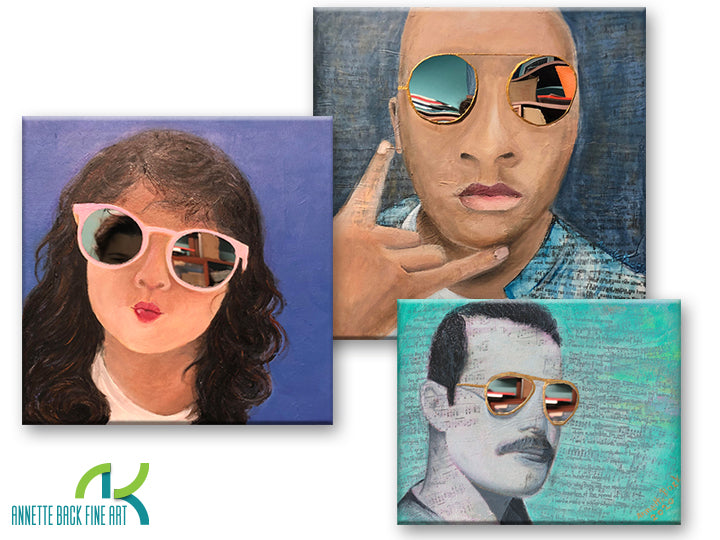
Annette Back Fine Art offers custom portraits in any size, and there are two simple ways to begin. You can select a size and complete a purchase, then contact the artist with the person you want painted and your preferred background color. To see an example of a custom portrait piece the studio offers, browse the Custom Portrait With Sunglasses. Or you can email first with what you have in mind and work through the details together.
Step 1: Choose the Artist and Confirm the Fit
Look at the artist's existing figurative work before you commit. You are not only buying a likeness; you are buying a way of seeing, the palette, the brushwork, the level of abstraction. If the gallery's paintings feel too loose or too literal for the recipient, that mismatch will show up in the commission.
Step 2: Share References and a Short Brief
Good commissions start with good information. Share the person's name, the mood you want the painting to carry, and any colors, settings or objects that feel personal. If the piece is meant to honor a relationship, a short description of that relationship helps the artist find the right expression.
Avoid overloading the brief. A few clear, meaningful details usually produce a stronger painting than a long list of requirements.
Step 3: Approve a Concept Before the Final Painting
Ask what the concept stage looks like. Many artists provide a rough sketch, a color study, or a written description of the composition before they begin the final work. This is your chance to adjust the pose, the crop, or the background while changes are still inexpensive. Confirm in writing what will be painted, what size, and on what surface.
Step 4: Review Revisions and Set Expectations
Ask up front how many rounds of revision are included and what counts as a revision versus a new commission. A common pattern is one concept revision and one in-progress review, with major changes after that treated as a new project. Get the answer before you pay, not after.
Step 5: Plan Delivery and Framing
The Custom Portrait with Sunglasses is listed at $1,250.00, and original works in the catalog range from $1,600.00 to $2,400.00. Pricing for a commission depends on the size you choose, so settle on dimensions early.
Plan for lead time. Allow time for the first conversation and the final painting before you set a gift date. If the occasion is fixed, work backward from the date and build in a buffer for shipping.
The steps below summarise the commissioning process the article walks through, from choosing the artist to planning delivery.
| Step | What to do | Timing or frequency |
|---|---|---|
| Choose the artist and confirm the fit | Review the artist's existing figurative work | Before you commit |
| Share references and a short brief | Give the person's name, mood, colors and settings | Early in the process |
| Approve a concept before the final painting | Confirm pose, crop, background, size and surface | Before the final painting begins |
| Review revisions and set expectations | Ask how many revision rounds are included | Before you pay |
| Plan delivery and framing | Settle on dimensions and allow lead time | Work backward from the gift date |
Turning a Photograph Into Original Figurative Art
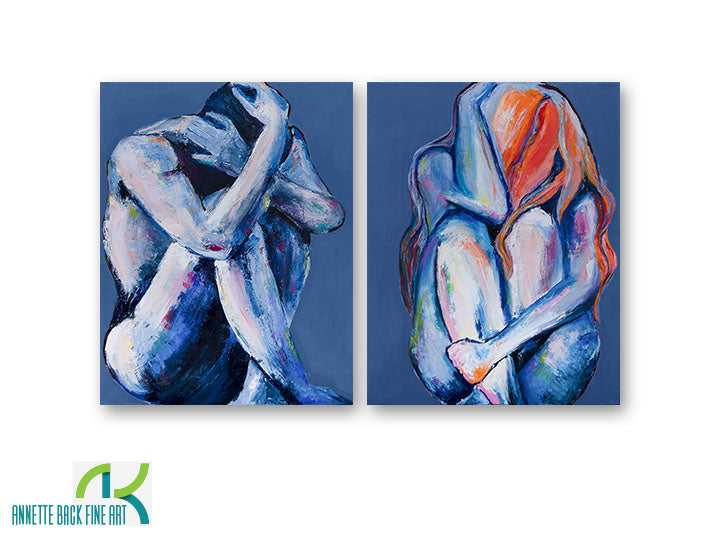
A photograph is often the starting point for a figurative commission. It can capture a pose, a light or a look that the person themselves would recognize. Many families bring in an old snapshot and ask the artist to reinterpret it in paint. For an example of how a photo-based image is offered as a finished product, see the Deux Pair Photo Print Matte.
Be clear about whose photo it is and whether you have permission to use it, especially if the image was taken by someone else.
Choosing a Subject and Composition That Feels Personal Without Overstepping
The most successful gift paintings strike a balance. They feel specific to the recipient without turning into an uncomfortable portrait of private details. A figurative piece can suggest a relationship through posture, color and expression rather than through literal labels. Getting that balance right is mostly a matter of making three decisions before the artist begins: the style, the pose and setting, and the number of subjects.
Choose a Figurative Style
Figurative art is not one look. Realistic work aims for a close likeness and clear detail. Expressive work keeps the likeness but pushes color and brushwork, so the feeling of the moment matters more than a photographic record. Minimalist work reduces the figure to a few essential shapes and often reads well in modern rooms. Stylized work borrows from illustration or folk traditions and can feel warmer and more playful.
Decide on Pose, Setting, and Number of Subjects
A single seated figure reads as intimate and calm. Two figures, a mother and child, a couple, siblings, need a clear relationship in the composition, usually through touch, gaze, or shared posture. Larger groups work best when the artist simplifies the arrangement rather than packing in detail. For the setting, a plain background keeps attention on the figure, while a suggested room or landscape adds context. If the recipient's space is small, a tighter crop or a single figure will hang more easily than a wide group scene.
Make the Gift Meaningful Without Overstepping
A gift portrait involves a second person's likeness, and that deserves care. Think about whether the recipient would actually want a portrait of themselves or a family member displayed on a wall. Some people love it; others find it uncomfortable. If you are unsure, a figurative piece that suggests a relationship, a pair of figures seen from behind, a shared gesture, can carry the same meaning with less exposure.
Watch out: commissioning a portrait of someone other than the recipient, especially a child or an estranged family member, can create awkwardness if that person has not consented. Ask the recipient's partner or a close family member before you proceed, and be willing to choose a different subject if the answer is uncertain.
Sensitive subjects need the same care. A memorial portrait, a figure who has passed away, or a scene tied to a difficult period can be deeply meaningful, but it can also reopen grief. Discuss the tone with the artist and consider a quieter, more symbolic composition rather than a literal scene.
Use a Sketch to Test the Composition
If you are unsure, discuss the level of detail with the artist and ask for a sketch before the painting is finished.
What Sets Original Figurative Art Apart From a Print
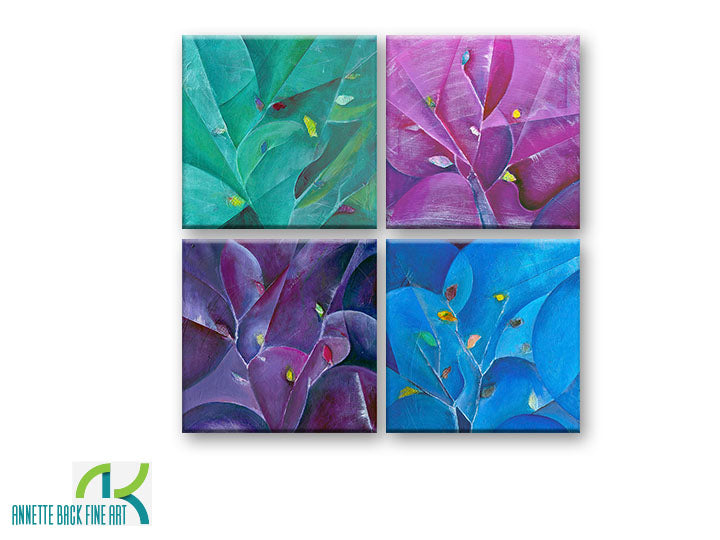
An original painting is a single work made by hand. A print is a reproduction of an image, even when it is a high-quality giclee or limited edition. Annette Back Fine Art offers both originals and prints.
Original paintings, such as the 16x16 acrylic "A Mother" priced at $1,800.00, are one-of-a-kind objects with surface texture and visible brushwork. You can browse the studio's original painting collection to compare them directly with prints. Limited edition prints make the work more accessible. A hand embellished print is still a print, but each copy carries individual handwork. See a limited edition hand embellished gallery wrap to view one example.
How to Display Portrait Art in a Home
Portrait paintings need thoughtful placement. Hang a large figurative piece where it can be seen from across the room, usually above a sofa, console or fireplace, with the center of the painting roughly at eye level. Natural light helps color show accurately, but avoid direct sunlight that can fade the work over time.
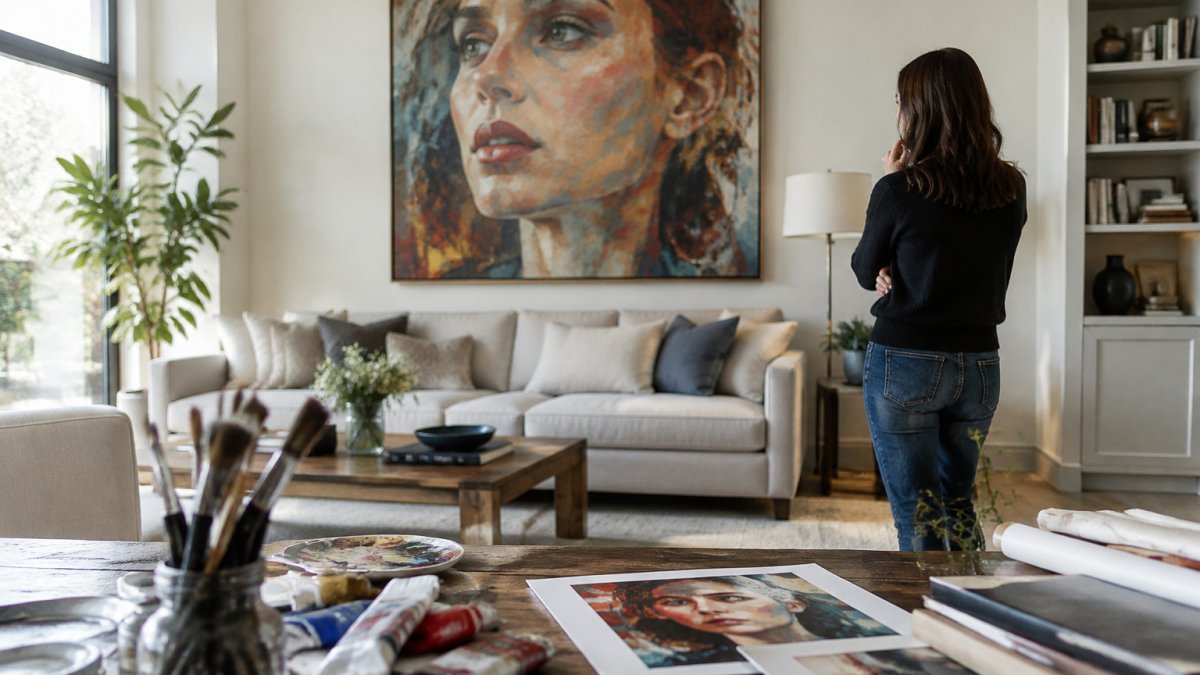
A bright living room with a large portrait above the sofa is a natural setting for the painting to become a focal point. Smaller prints can be grouped in a gallery arrangement or placed in a hallway where they can be appreciated up close.
Planning Your Custom Portrait Gift
Start with the recipient and the occasion, then work backward. A birthday, anniversary or housewarming each suggests a different tone. Decide on your budget, choose a size that fits the intended wall, and reach out early so there is time for the conversation, the concept and the painting itself.
Once the piece arrives, the gift is complete. A custom figurative painting, given with thought, becomes a gift the recipient keeps and shares for years.
Get started with Annette Back Fine Art and commission a figurative painting that carries your story into your recipient's home.
Frequently Asked Questions
What makes custom figurative artwork a meaningful gift?
Custom figurative artwork carries a personal story. A painting of a person, a pet, a home or a moment from the recipient's life shows that you paid close attention to what matters to them. Unlike a mass-produced item, a commissioned painting exists only once and is made for one person. Many recipients keep these pieces for decades and display them prominently, which turns the gift into a lasting part of their home.
How do you commission a custom portrait as a gift?
Start by choosing the subject, then select a size and contact the artist with the person you want painted and any background preferences. Share one or more clear reference photos, ideally in good light and showing the face or features you want captured. Discuss timing and shipping before you order, so the piece arrives before the occasion. Original custom orders such as those offered by Annette Back Fine Art can be discussed by email or phone before any purchase is made.
Can you commission artwork based on a photograph?
Yes. Most artists paint from reference photos, and a sharp, well-lit image with the subject clearly visible gives the best result. Confirm that you own the rights to the photo or have permission to use it, since a painting based on someone else's image can raise copyright questions. Send the artist the original file rather than a screenshot.
How do you display a portrait painting at home?
Hang a large portrait at eye level, roughly centered on the wall, so the face sits where people naturally look when they enter the room. Give it enough clear wall space so it reads as a focal point rather than competing with other objects. Use indirect light and avoid direct afternoon sun, which can fade paints over time. Original paintings usually look best when framed or displayed on a gallery-style canvas that suits the room.


0 comments