


Table of Contents
- The Investment Value of Original Art vs. Prints
- Artistic Integrity: One-of-a-Kind vs. Mass-Produced
- How to Display Original Art at Home
- The Tactile and Visual Depth of Authentic Artwork
- Hand Embellished Prints Explained
- Commissioning Custom Artwork for Your Space
- Authentication, Provenance, and Long-Term Care
- Frequently Asked Questions
Last Updated: September 21, 2026
The Investment Value of Original Art vs. Prints
Choosing original art instead of prints represents fundamentally different propositions. The distinction touches on investment potential, artistic integrity, and emotional resonance.
Investing in original art instead of prints typically appreciates over time, especially works by established or emerging artists. A painting or sculpture exists as a singular object with provenance that strengthens its value. Prints are reproductions, even high-quality giclée or hand embellished prints are mass-produced or semi-mass-produced versions. That doesn't make them inferior, it makes them different.

The real conversation is about alignment: Are you seeking an investment piece that might appreciate, or art that speaks to you emotionally? Both are valid.
Artistic Integrity: One-of-a-Kind vs. Mass-Produced
When you purchase original artwork, you own the only version in existence. The artist created it as a singular object, and that one-of-a-kind status carries weight in terms of artistic integrity.
Mass-produced prints are created to be replicated. Not all reproductions are equal, and understanding the spectrum matters when deciding what to buy.
The Print Quality Spectrum
Standard commercial posters are printed on thin paper with inks that fade within a few years. They're inexpensive but lack longevity.
Giclée prints use high-resolution inkjet printing onto fine art paper or canvas with archival-quality, pigment-based inks that resist fading for 50+ years with proper care. The image fidelity is impressive, reproducing color and detail faithfully. However, the surface remains smooth, lacking the dimensional texture of actual brushwork.
Lithographs and screen prints use traditional techniques with hand-pulled prints, making them semi-original works. Each carries slight variations, with the artist's hand visible in the process.
Hand embellished prints begin as giclée reproductions but are finished by hand with paint, texture, or embellishments. This transforms identical reproductions into pieces with individual character. No two are exactly alike. Limited edition hand embellished prints are numbered and signed, creating scarcity and exclusivity.
Original Artwork: Permanence and Presence
Original paintings created with quality materials can last centuries. Oil paintings have survived 500+ years; acrylic is expected to remain stable 200+ years or longer. Professional-grade pigments and archival supports significantly outlast student-grade materials.
Original artwork carries artistic integrity reproductions cannot match. The artist's deliberate choices about brushstroke, color mixing, layering, and composition exist in the physical object itself. A reproduction captures the visual result but not the intentional process.
Original artwork satisfies the desire for something truly unique with the artist's hand in every detail. If you're comfortable with a high-quality reproduction that captures the artist's vision faithfully, limited edition or hand embellished prints deliver genuine artistic value at a fraction of the cost.
How to Display Original Art at Home
Displaying original art requires proper environmental conditions and thoughtful placement to protect its longevity while showcasing its qualities.
Position original artwork where it receives gentle, indirect light. Natural light fades pigments over time, particularly direct sunlight. Consider UV-protective glass or acrylic if the piece is framed.
Avoid high-humidity areas like kitchens and bathrooms, which damage canvas and degrade paint. Choose stable interior walls away from heating vents and air conditioning units that create temperature fluctuations.
Use professional framing with archival-quality materials, acid-free mats, UV-protective glass, and proper backing. Poor framing traps moisture and accelerates deterioration.
Position original artwork as a focal point where viewers can appreciate its visual depth and dimensional quality. Many collectors place original pieces prominently in living rooms or entryways as conversation starters.
:::pro tip Original paintings benefit from being hung at eye level in spaces with stable temperature and humidity. This positioning showcases the work's full visual impact while protecting it from environmental stress.
The Tactile and Visual Depth of Authentic Artwork
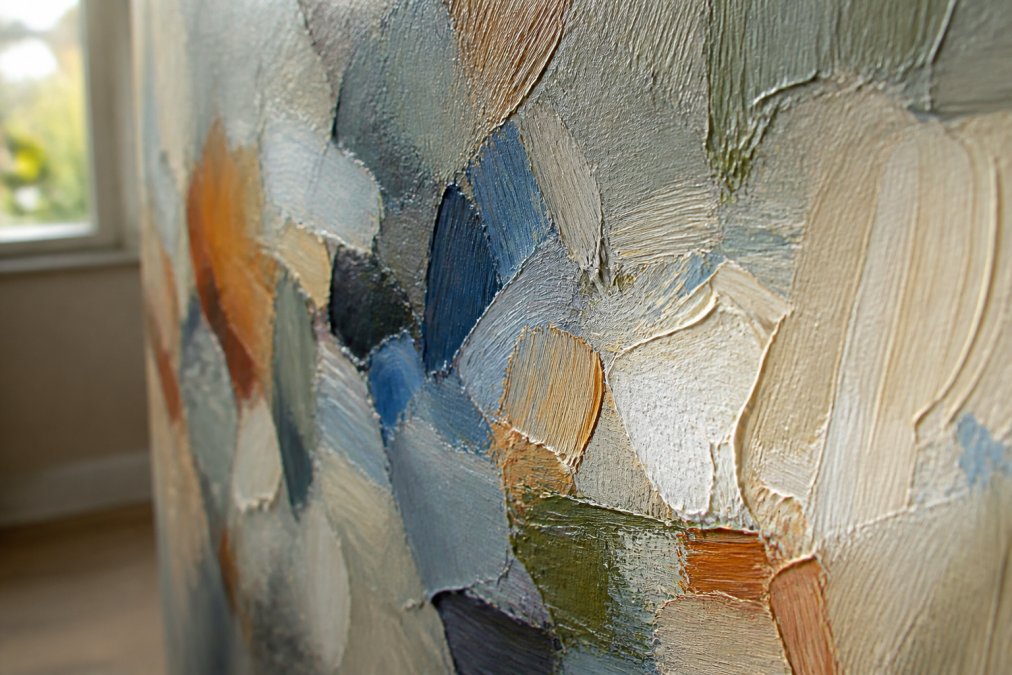
When you stand in front of an original painting, you experience the actual texture of the work. Brushstrokes, impasto, layered pigment, and the physical canvas surface create tactile and visual depth that reproductions flatten.
A giclée print reproduces the image faithfully but cannot replicate the actual texture of paint on canvas. Your eye perceives a smooth surface rather than the dimensional quality of authentic brushwork.
Original artwork exhibits subtle color variations and light interactions reproductions miss. The way pigment catches light and the depth created by layered applications create a fundamentally different experience.
For collectors and art enthusiasts, this tactile and visual depth is a core reason to invest in original work. You're buying an object with physical presence that changes how you relate to the piece over time.
Hand Embellished Prints Explained
Hand embellished prints bridge the gap between affordable reproductions and costly originals. These begin as high-quality giclée prints that are finished by hand with paint, texture, or embellishments.
The process typically involves printing a base image, then having an artist or technician add painted details, highlights, or dimensional elements directly onto each print. This transforms what would be an identical reproduction into a piece with individual character. No two hand embellished prints are exactly alike, even when based on the same original image.
Limited edition hand embellished prints add another layer of value. When an artist creates a limited edition of, say, 25 hand embellished prints, each one is numbered and signed. That scarcity creates exclusivity and collectibility. You're getting something closer to original artwork, with individual character and limited availability, at a price point significantly lower than a true original.
Annette Back Fine Art offers hand embellished prints like the Happy - Limited Edition / Hand Embellished / Gallery Wrap, a limited edition piece numbered 1 of 25. Each hand embellished print carries the artist's signature and number, adding authenticity and collectibility to what begins as a reproduction.
Hand embellished prints work well for collectors who want something more distinctive than a standard print but need a more accessible price point than original artwork. They also appeal to people drawn to the artist's work who want to support the artist's practice without the investment of an original piece.
Commissioning Custom Artwork for Your Space
Commissioning custom artwork is a direct path to original work tailored specifically to your space and vision. Rather than searching for existing pieces that might fit your interior design, you collaborate with an artist to create something designed for your home.
The process begins with a conversation about your concept, aesthetic preferences, color palette, and how the piece will function in your space. A skilled artist listens carefully to understand what you're seeking, then develops preliminary concepts for your feedback. This back-and-forth ensures the final work aligns with your vision.
Custom commissions offer several advantages. You get an original artwork created specifically for you. You can influence the color palette, size, and subject matter to match your interior design goals. You develop a relationship with the artist, which often deepens your connection to the finished work. And you're supporting a living artist directly, knowing your investment funds their practice.
The timeline for a commission typically spans weeks or months, depending on the artist's schedule and the complexity of the work. This isn't a quick purchase, it's a collaborative process that requires patience and clear communication.
Annette Back Fine Art offers virtual live viewing and consultation services, making it possible to discuss commission ideas, view works in progress, and build that artist-client relationship even remotely.
Authentication, Provenance, and Long-Term Care
Provenance, the documented history of ownership and location of an artwork, matters significantly for original pieces, particularly as they appreciate in value and move through the market. When you purchase original artwork, you should receive clear documentation of its creation, any previous ownership, exhibition history, and any publications featuring the work. This record strengthens the piece's authenticity and protects your investment over time.
What Authentic Documentation Looks Like
- The artwork's title, date of creation, and medium (oil on canvas, acrylic on panel, mixed media, etc.)
- Dimensions and any edition information if applicable
- The artist's signature or mark of authentication
- A statement of authenticity signed by the artist or authorized representative
- A photograph or image of the work for reference
- Any exhibition history or publications where the work has appeared
Red Flags and What to Avoid
Long-Term Care and Preservation
Common preservation concerns for original paintings include:
- Cracking or flaking paint: Caused by extreme temperature or humidity fluctuations, or by age and material incompatibility. A conservator can stabilize and repair these issues.
- Canvas deterioration: Canvas fibers weaken over time, especially if exposed to moisture or pests. Relining (attaching a new canvas support to the back) can extend the life of a compromised painting.
- Fading or color shift: Some pigments fade with light exposure; others shift color over decades. UV-protective framing slows this process significantly.
- Mold or mildew: High humidity in storage or display areas can encourage biological growth. Proper environmental control prevents this.
Supporting Your Investment
Frequently Asked Questions
What is the difference between original art and art prints?
Original art is a one-of-a-kind piece created directly by the artist, with unique brushstrokes, texture, and artistic presence. Prints are reproductions of artwork, whether unlimited editions or limited runs. While high-quality prints can capture the image accurately, they lack the tactile quality, provenance, and artistic integrity of an original. Original artwork holds resale value and appreciation potential that mass-produced prints cannot match.
Do art prints hold the same long-term value as original paintings?
No. Original artwork typically appreciates in value over time, especially when created by established or emerging artists, and builds a documented provenance. Prints, even limited editions, generally maintain their value rather than appreciate. The rarity and one-of-a-kind nature of original art makes it a more compelling investment for collectors seeking pieces that strengthen in worth and cultural significance.
What are the benefits of choosing hand embellished prints over standard reproductions?
Hand embellished prints bridge the gap between reproductions and originals by adding artist-applied details like paint, texture, or mixed media directly onto the print surface. This creates visual depth and a more authentic aesthetic experience than flat reproductions. Each hand embellished piece is unique due to the artist's individual application, offering greater artistic integrity and tactile quality while remaining more accessible than a full original artwork.
How does owning original art change the atmosphere of a room?
Original artwork creates emotional resonance and visual presence that mass-produced pieces cannot replicate. The authentic brushstrokes, color depth, and artist's intentional layering draw viewers in and establish a dialogue with the space. This authentic connection transforms a room's aesthetic value and adds sophistication, making the environment feel curated and personally meaningful rather than generic or decorative.


0 comments