


Last Updated: November 4, 2026
Quick Summary
To match mixed media art to your decor, start with the room's function, natural light and existing palette, then echo one or two tones from the space and add a single bold contrast. Balance scale so the piece fills about two-thirds of the wall above furniture.
- Note the room's main use and track where natural light falls at different times of day.
- Pick one accent color from a cushion, rug or plant and repeat it in the artwork.
- Keep wall color neutral when the art is bold, and avoid placing two loud pieces side by side.
- Fill about two-thirds of the wall or furniture width above a sofa or console.
- Center the artwork at roughly 57 to 60 inches from the floor, with 6 to 8 inches above furniture.
Table of Contents
- Start With the Room: Function, Light and Existing Palette
- Understanding What Makes Mixed Media Art Different
- Matching Color and Palette Without Making the Piece Disappear
- Getting Scale, Proportion and Visual Weight Right
- How to Hang Art at Home for Maximum Impact
- Original Work, Hand Embellished Prints or Fine Art Photography Prints: Choosing the Right Format
- Booking Your Consultation to Plan Your First Piece
- Frequently Asked Questions
Start With the Room: Function, Light and Existing Palette
Choosing the right mixed media art for your home starts with the room, not the artwork. Before you fall for a piece, look at the space it will live in.
Think about what the room does. A living room sees guests and long evenings. A bedroom calls for calmer colors. A hallway needs a piece that holds attention for a few seconds as you walk past.
Next, check the light.
Finally, list the colors already in the room. Note your largest existing pieces: the sofa, rug, curtains and wall paint.
- Note the room's main use
- Track where the natural light falls at different times of day
- Write down the three most dominant colors in the room
- Measure the wall space you want to fill
Understanding What Makes Mixed Media Art Different
Mixed media art combines several materials in one piece. A single work may layer paint, photography, hand lettering and metallic details. This layering is what gives the surface its depth and texture.
That texture changes how the piece reads in a room. Light moves across raised areas and shadows settle into the layers, so the work looks different at morning and at night. A flat print rarely does this.
Place it where people will stop and look.
Matching Color and Palette Without Making the Piece Disappear
Matching art to your decor does not mean finding an exact color match. A piece that copies your walls will blend in and vanish. The goal is to echo one or two tones from the room and add one clear contrast.
Start with your existing palette. Pick one accent from a cushion, rug or plant, and look for that same tone in the artwork. The Reflecting by Annette Back - 30x20 original oil on canvas uses aqua and green tones and sells for $2,400.00. See the piece and its palette up close. Each original oil painting is signed and dated by the artist.

Use the artwork to add one bold note. If your room is mostly beige and white, a piece with a stronger color gives the eye somewhere to go. Keep the rest of the decor calm.
- Choose one color from the artwork and repeat it in a small object
- Keep wall color neutral when the art is bold
- Avoid placing two loud pieces side by side
The article's key points on matching color and palette are summarised below.
| Idea | What to do | Why it matters |
|---|---|---|
| Pick one accent | Repeat one artwork color in a cushion, rug or plant | Links the piece to the room |
| Keep walls neutral | Use calm wall color when the art is bold | Stops the piece from clashing |
| Add one bold note | Choose a stronger color than the beige or white room | Gives the eye somewhere to go |
| Avoid two loud pieces | Do not place two bold works side by side | Prevents visual competition |
Getting Scale, Proportion and Visual Weight Right
Scale decides whether a piece feels confident or lost. A small artwork on a large empty wall looks like a mistake. A huge piece squeezed above a small table looks cramped.
A good rule is to fill about two-thirds of the wall or furniture width above a sofa or console. For a larger statement, the Horizon by Annette Back - 40x30 original oil on canvas, priced at $3,800.00, works well over a sofa or fireplace. Its circles and open blue space give the wall room to breathe.
Visual weight matters as much as size. Darker, denser areas feel heavier than pale, open ones. Balance a heavy section of the artwork with lighter wall space or a lighter nearby object.
Reflecting by Annette Back - 30x20 →
How to Hang Art at Home for Maximum Impact
Hanging height is where many people go wrong. Most art looks best with its center at eye level, roughly 57 to 60 inches from the floor. This standard is widely used by galleries and museums, and it keeps the piece comfortable to view.
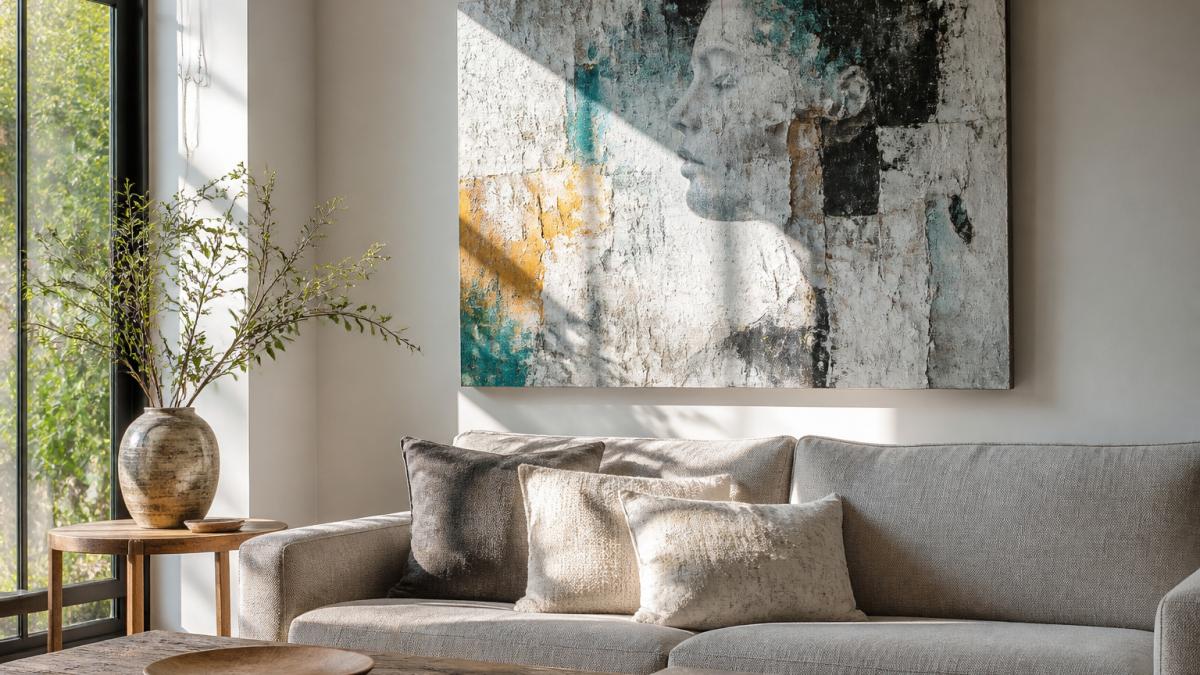
When you hang above furniture, leave about 6 to 8 inches between the bottom of the frame and the top of the sofa or console. Too much space makes the art look like it floats away from its base.
The Leaves by Annette Back, 12x12, set of 2, is priced at $1,600.00. Browse the matched pair to plan a grouped arrangement. Hang the two pieces at the same height with an even gap. Lay them out on the floor first to test the spacing before you drill.

- Mark the center height with painter's tape before you hammer
- Use a level on every piece
- Test the layout with paper templates for groups
Framing, Mounting and Protecting Texture
Mixed media surfaces have raised areas, so the mounting method matters more than it does for a flat print. Check the back of each piece before you hang it, since the sides are stapled.
When a mixed media piece does need a frame, the choice comes down to a standard frame or a shadow box. A standard frame presses the glazing close to the surface, which can flatten raised areas and cast hard reflections across texture.
Watch out: off-the-shelf frames are sized for flat artwork, so a deep mixed media piece can bow or crush at the edges when forced into one. Measure the total depth of the piece, including any protruding elements, before buying a frame.
Keep original work away from direct sun and damp walls. Sunlight fades pigment over time, and humidity can warp the canvas. Hang it on an interior wall where possible. Handle the piece by its edges and avoid pressing on the textured areas.
Original Work, Hand Embellished Prints or Fine Art Photography Prints: Choosing the Right Format
Your budget and goals shape which format suits you best. Each option has a different role in a home, and the right choice depends on how much texture you want on the wall and how much care you are willing to give the piece.
- Original paintings: One-of-a-kind works, each signed and dated by the artist.
If you want a piece with its own history, choose an original. If you want a consistent look across several rooms, a print may fit better. Read whether original painterly art is worth the investment. Compare original art and canvas prints side by side.
A practical way to decide is to match the format to the room's traffic and light. A hallway or a child's room benefits from a flatter, easier-to-clean print behind glazing. A living room or study, where people stop and look, rewards the depth of an original or a hand embellished piece.
Keep any format out of direct sun, since ultraviolet light fades pigment and bleaches paper over time. Avoid hanging on exterior walls, where temperature swings and dampness can warp a canvas or loosen collage.
When you are ready to plan a piece for a specific wall, a consultation can help you weigh format, framing, and placement together.
Booking Your Consultation to Plan Your First Piece
Choosing art for your home is easier with a second opinion. Annette Back Fine Art offers virtual live viewing and consultation services. Book a consultation to talk through your room with the team.
Frequently Asked Questions
Does artwork have to match the color palette of a room?
Artwork does not need to match your palette exactly, but it should share at least one or two colors with the room, such as an accent cushion or rug tone. This creates a visual thread that makes the piece feel intentional rather than random. Mixed media pieces often contain several colors, so you can pick the dominant hue in the artwork and repeat it in a small object nearby. A bold piece can also work as the single accent color in a neutral room, provided the surrounding walls and furniture stay calm enough to let it stand out.
How do you balance textured mixed media art with minimalist decor?
Minimalist rooms benefit from one strong focal point, and textured mixed media art can serve that role well. Keep the surrounding walls and furniture simple, with clean lines and limited accessories, so the layered surface reads as the room's main feature. Choose a frame with a slim profile or a simple floating mount to avoid visual clutter. Hang the piece with generous negative space around it, which lets the texture and depth of the work register clearly.
How do you hang art at home so it looks balanced?
Hang most artwork so its center sits at roughly eye level, which is typically around 57 to 60 inches from the floor. When placing art above furniture, leave about 6 to 10 inches between the bottom of the frame and the top of the sofa or console. Use painter's tape on the wall to mark the outline of the piece before drilling, and step back to check the position from several spots in the room. Rooms with high ceilings can support larger pieces, while smaller walls often suit a single medium work.
Should I choose original mixed media art or high-quality prints for my space?
Original works offer unique surface texture, layering and the value of owning a one-of-a-kind piece, which tends to hold its appeal over time. Fine art photography prints and limited edition giclee prints provide the same imagery at a lower cost and are a practical choice for larger walls or several rooms. Hand embellished prints sit between these options, with individual touches added by hand to each copy. Decide based on how much you want the texture to matter and how much your budget allows.


0 comments